Paytm Money • B2C • Fintech
Making bonds for first-time investors
- Visual & Product Designer
- Developers, Product Manager, Bonds Expert
- Jan - May 2023
- iOS, Android
In short
In India, bonds were not for most retail investors. Buying one meant reading data-heavy sheets in Excel, calling a broker, and putting in ₹10 lakh for most corporate bonds.
In late 2022, SEBI lowered that to ₹1 lakh, and bonds could finally be sold on a phone. The hard part was no longer the price. It was helping people understand what they were buying.
Paytm Money, an investing app built for mutual fund investors and stock traders, wanted to offer bonds. I was the first designer on the product. I owned the research, the information design, and the visual design of the listing, the detail page, the watchlist, and the components. The product team owned the order flow and built the app from my designs.
- 85K+
- 65K+
- ₹14,500
- 12
Solution
1. Listing card that helps make a decision quickly
In my research, people told me they decide on four things: company name, tenure, amount, and ask rate.
2. A detail page that explains the bond and the company.
It covers the bond details, the company’s history and the tax details.
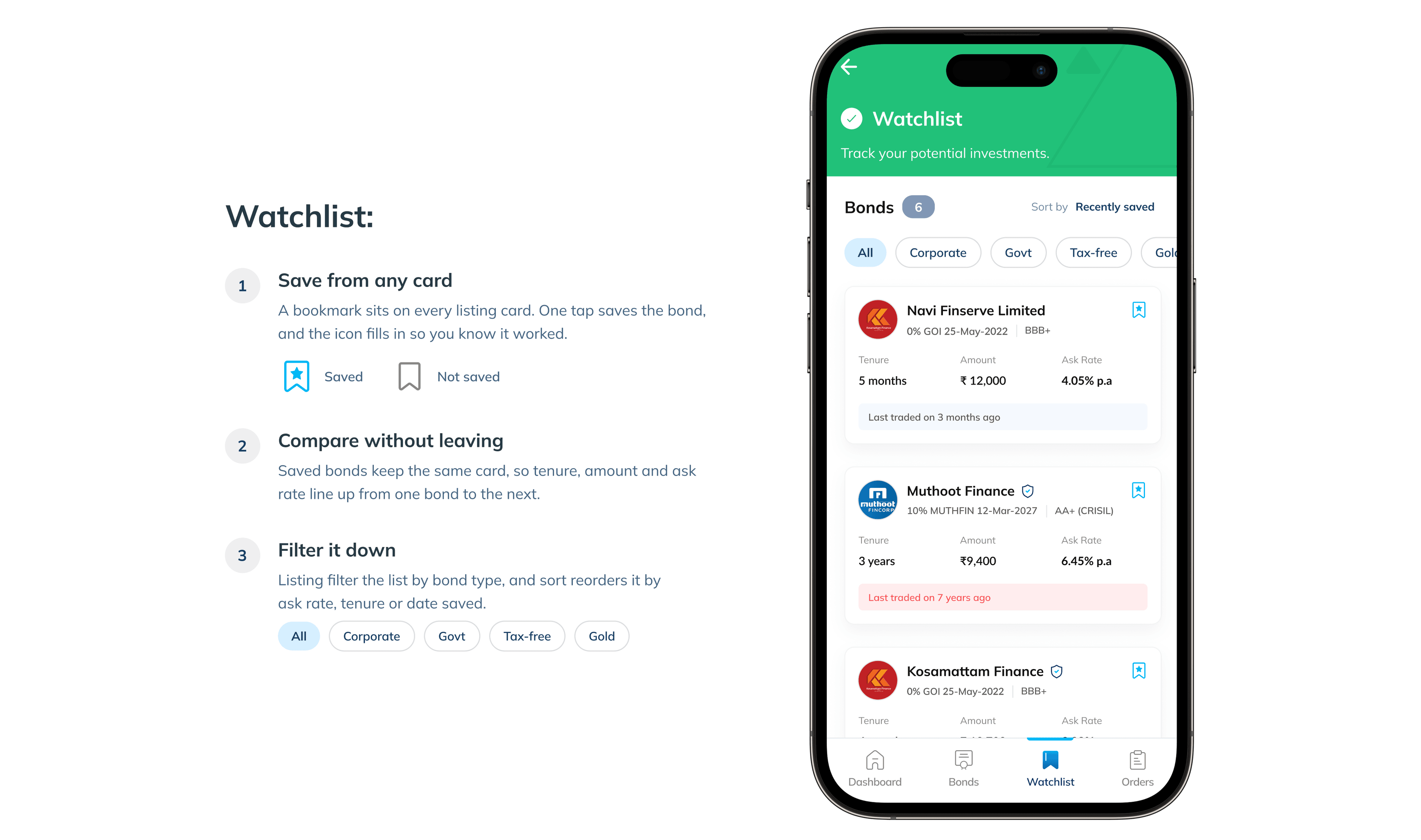
3. A watchlist to compare bonds.
Bookmark any bond to save it, then see and compare your saved bonds in one place.
4. Bonds on the home screen.
Once you buy a bond, it shows up on your home screen next to your stocks and mutual funds.
Overview
Paytm Money is where millions of Indians make their first investment.
Paytm Money is the investing arm of Paytm, one of India's largest payments companies. It offers stocks, mutual funds, ETFs & more with zero platform fees.
Problem
Paytm Money had no bonds product.
The bond platforms that existed were built for professionals: dense tables, every field at the same weight, jargon assumed. The SEBI change created a new customer, a retail investor buying a first bond from a phone.
The brief was to design that product inside a design system built for stocks and mutual funds, in five months, to launch day.
Goals

Understand a bond quickly
First-time investors buy

Before paying, know what changes in your return.
No surprises after purchase.

Compare bonds without leaving the app
Fewer drop-offs to other sites
Research
I knew very little about bonds when I started, so I learned them from the bonds expert before I asked anyone else anything.
With the PM and the bonds expert, I wrote a questionnaire and interviewed 12 customers (first-time and experienced investors). I focused on understanding these three types of questions.
What do you look at first?
What makes a listing feel safe?
What makes you walk away?
Findings
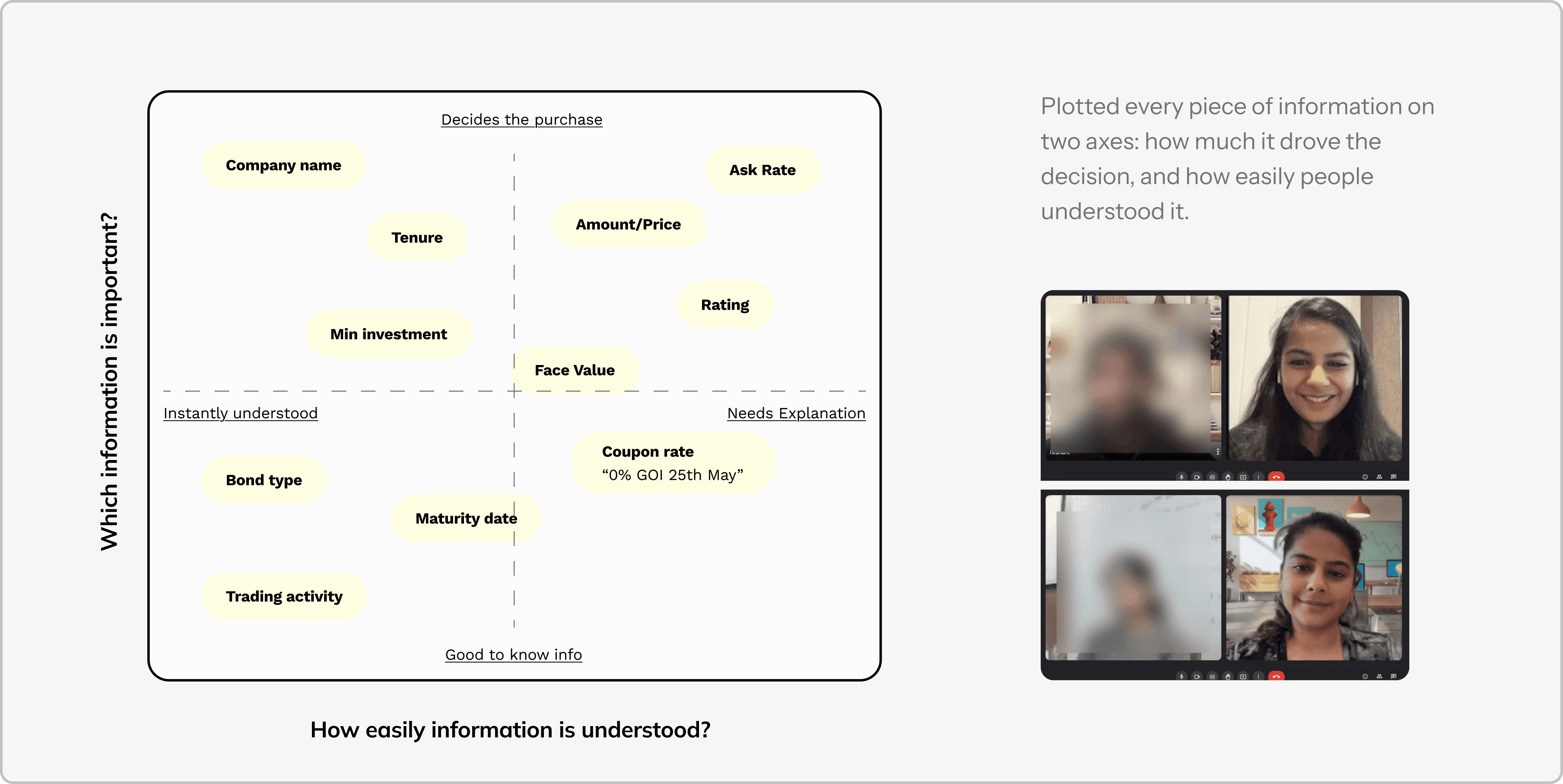
A clear order came out. The company name came first, then how long, how much, and what you earn. Rating, coupon and maturity confirmed a choice rather than made it.
Information architecture
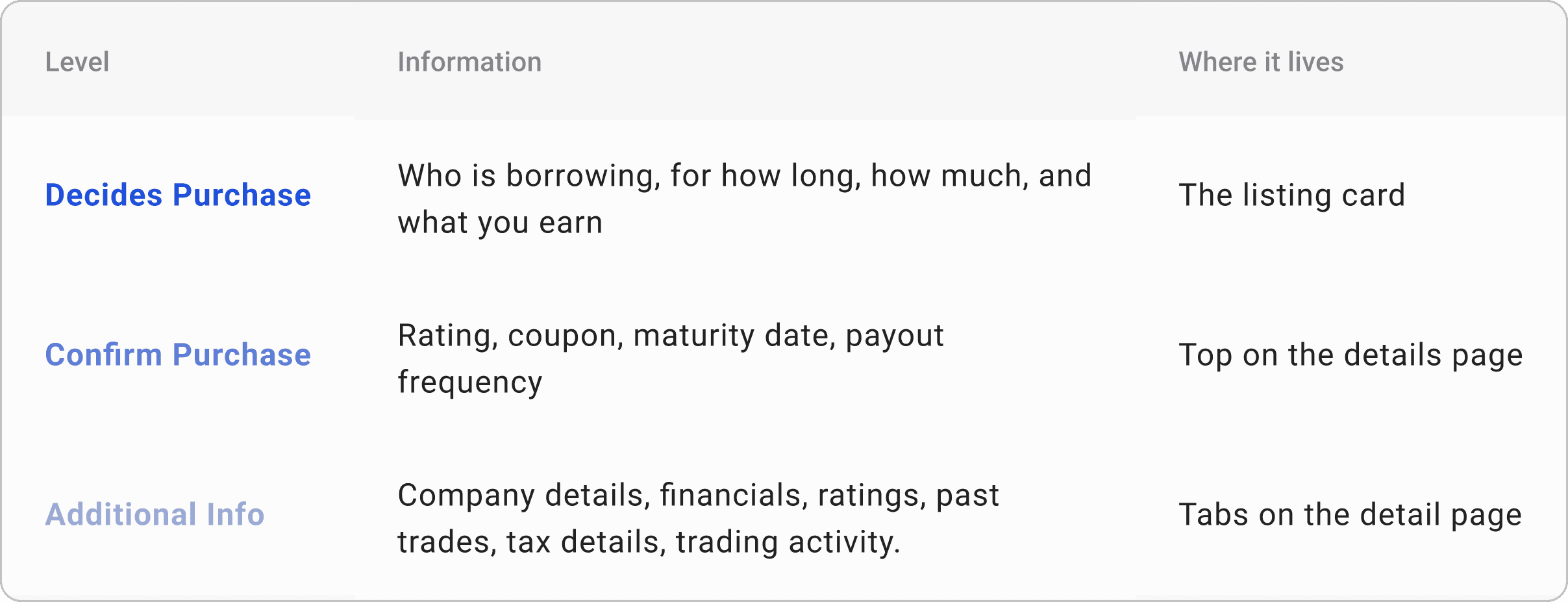
Using the 2x2 matrix and the interviews, I decided what information goes on the listing and what goes on the details page.
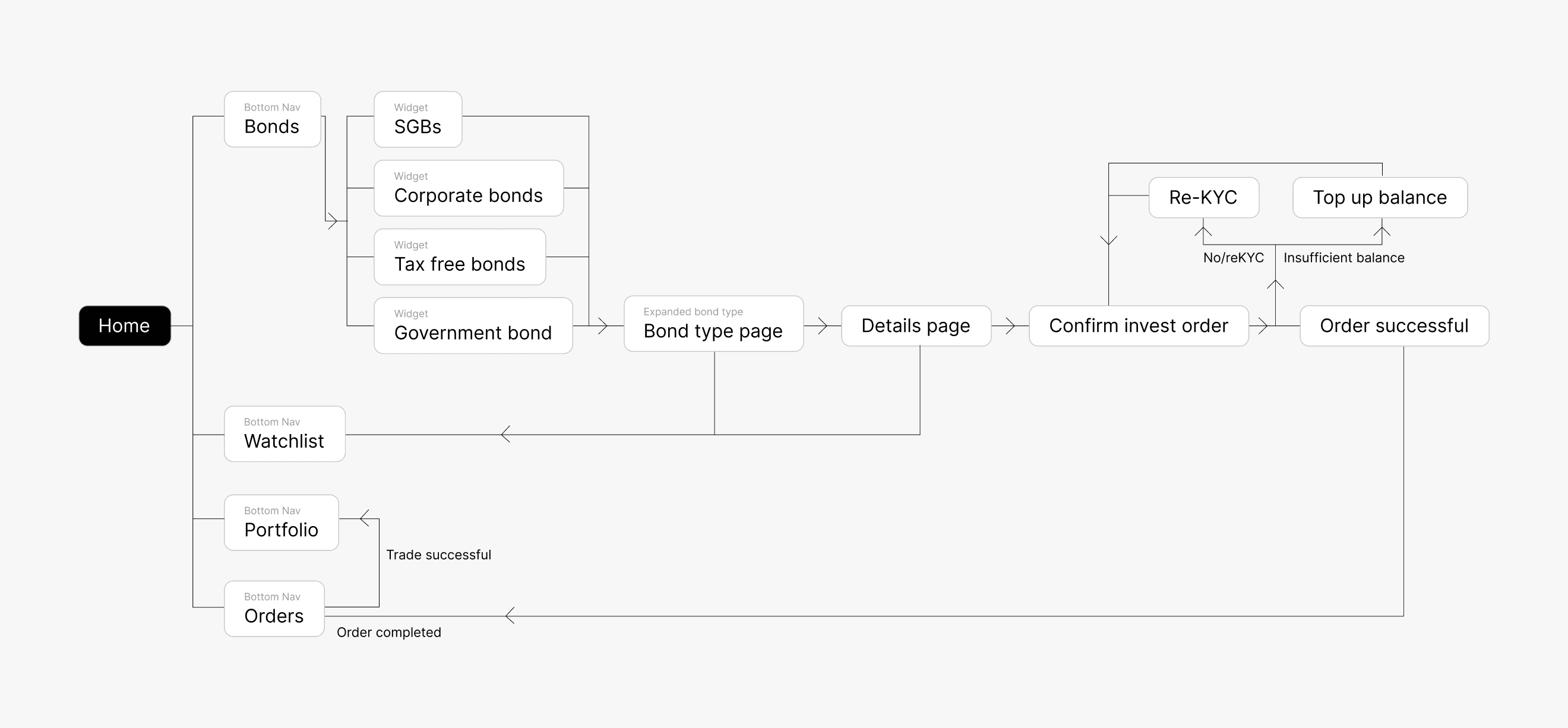
Bonds will now have a home screen of its own. The nav bar would have Home (Paytm money), Bonds (homepage), Watchlist, Portfolio, and Orders. A page for each type of bonds (corporate, tax-free, government, and SGBs).
Design process
Four cards, one winner
I made four versions, each leading with one thing: the company, the price, or the ask rate. Feedback from the PM, the bonds expert and my peers narrowed them down, and a few customers picked the final one.
A banner for each type of bond
First-timers couldn't tell why they would pick a government bond over a company bond. So instead of one line of text, each type got its own banner with three benefits, an illustration, and a button.
The “Keep in mind” card
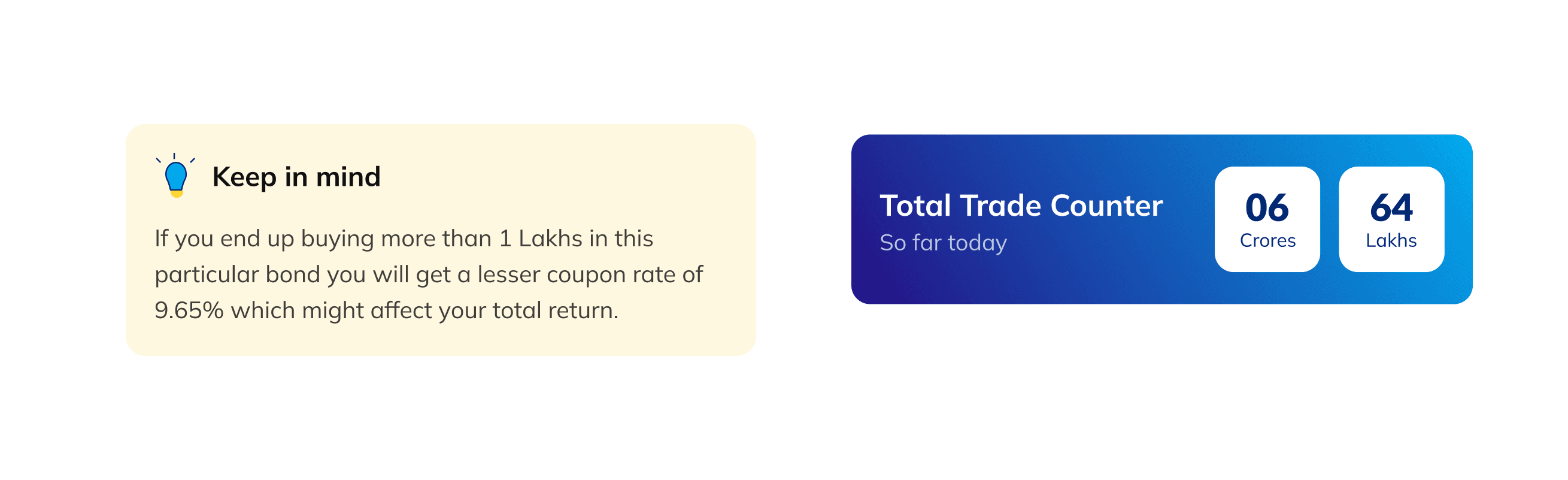
Some bonds pay a lower rate if you buy more than ₹1 lakh. Nobody would find that in a table, so a small card at the top of the detail page explains that to the investor.
Save now, compare later
In the interviews, people told me they screenshotted bonds to compare them on other sites. So I put a bookmark on every card and designed a watchlist page, so they could compare inside the app.
The design details
Most of the design decisions happened on the smaller UI elements: what happens when a bond is closed? What happens when the next steps change? What happens when an order can’t go through?
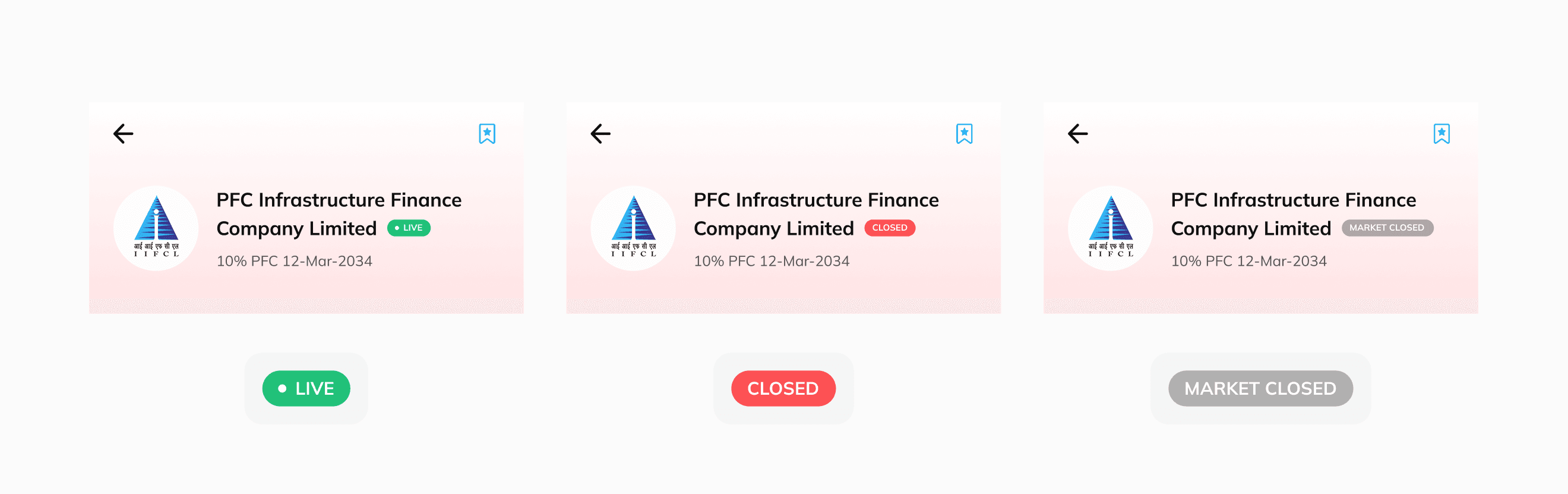
Live or closed tags
A tag next to the company name shows whether you can buy a bond. Live means it’s open for orders, and Closed means it isn’t. When the market is shut for the day, you can still invest, and the page tells you your order will go through when the market opens.
One main button at each step
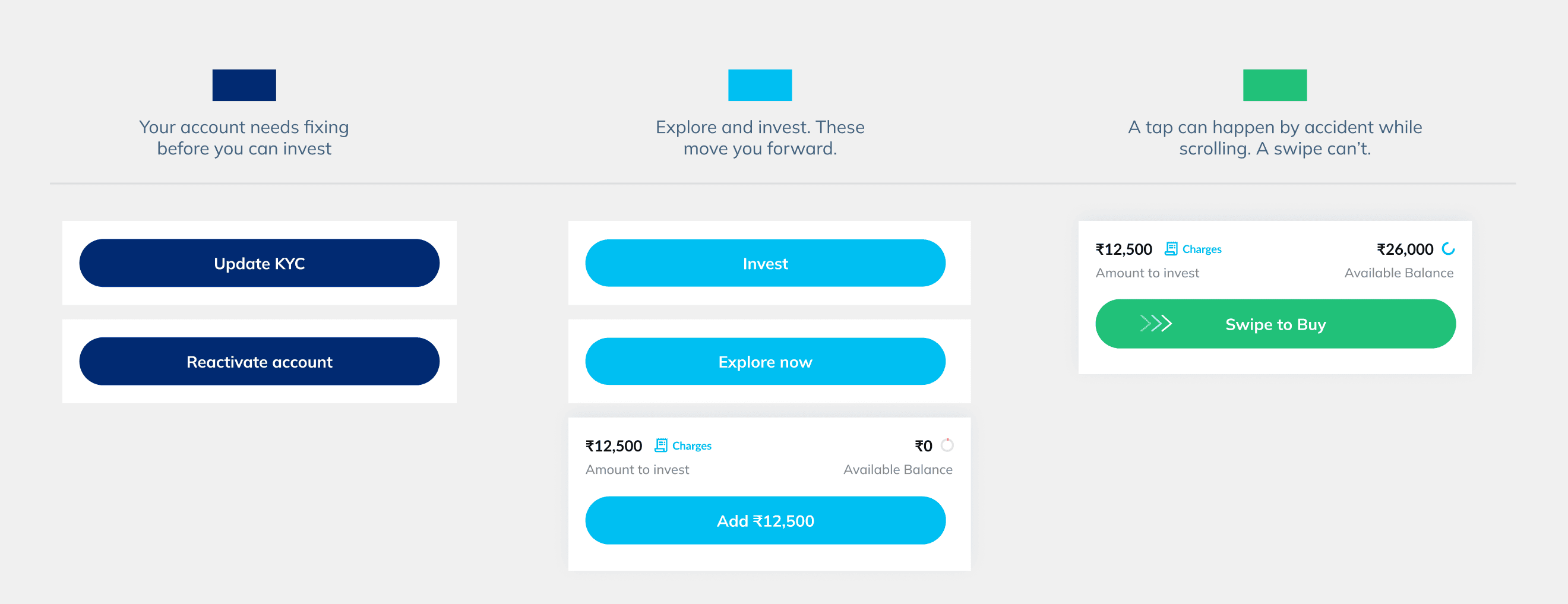
Each screen has one main button, and its color tells you what kind of step it is.
When an order can't go through
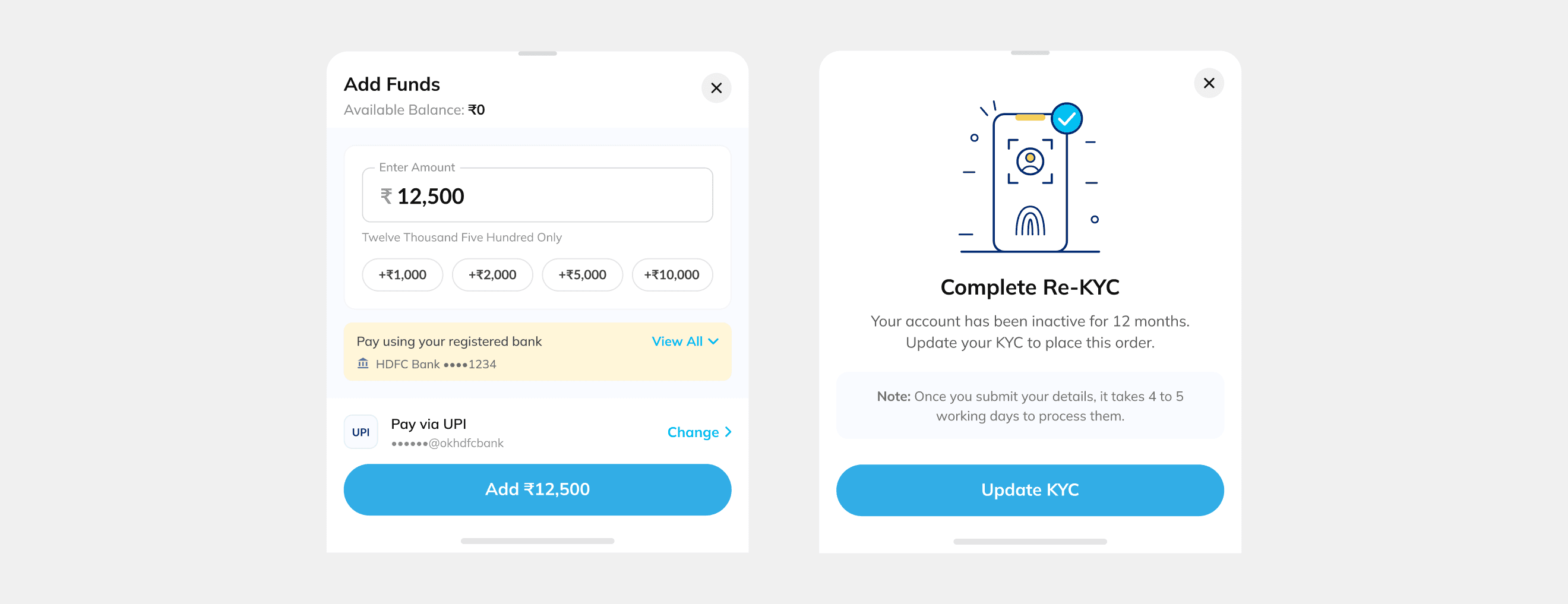
If the balance is too low, an add funds sheet opens over the order. Or if the account has been inactive for a year, the KYC needs updating first.
Design system
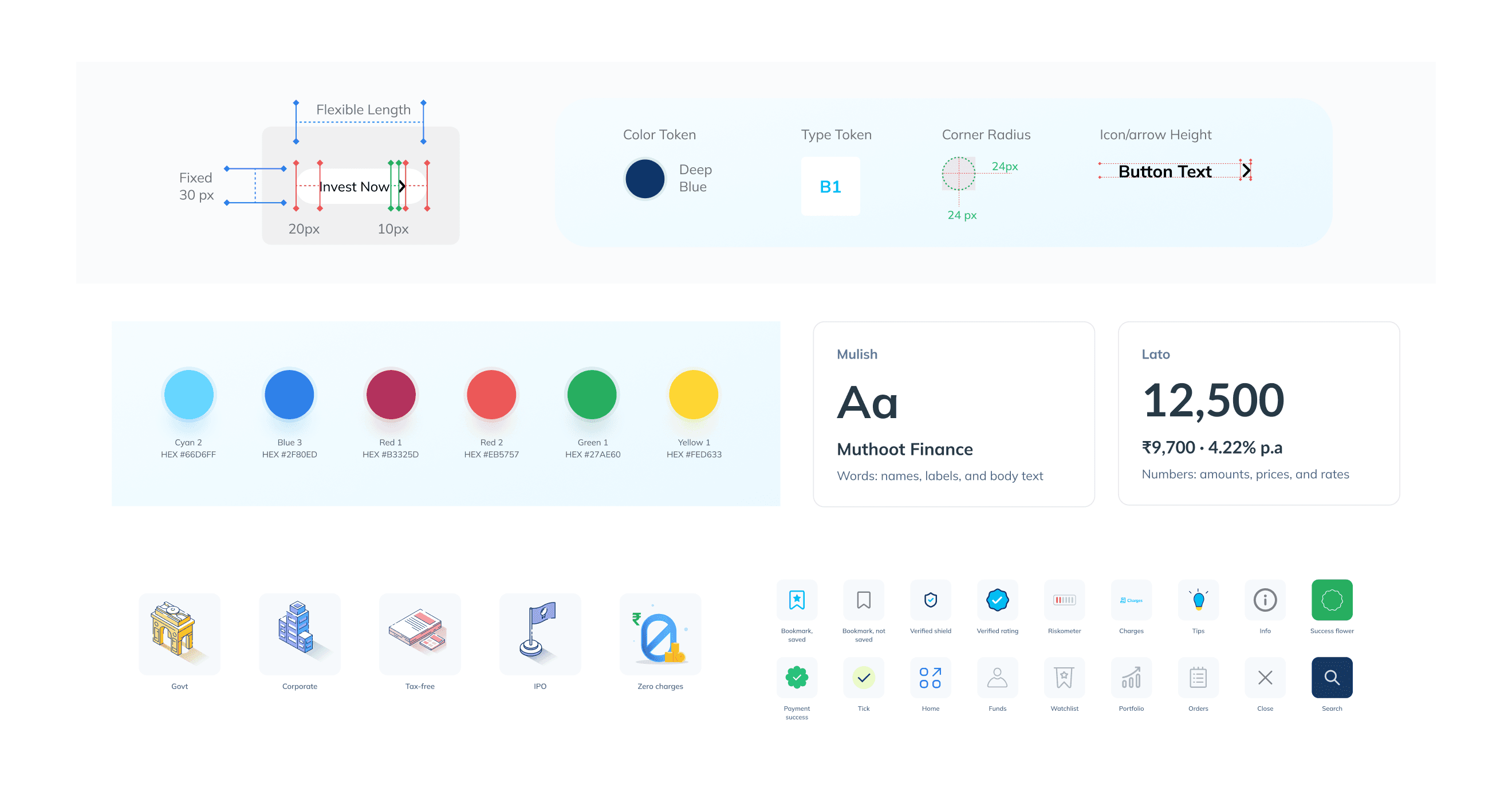
Using the Paytm Money design system that I created, colors came from the system’s six semantic colors. Mulish for text, Lato for numbers. New components were included as the product got built.
Designing with constraints
What didn't ship and why.
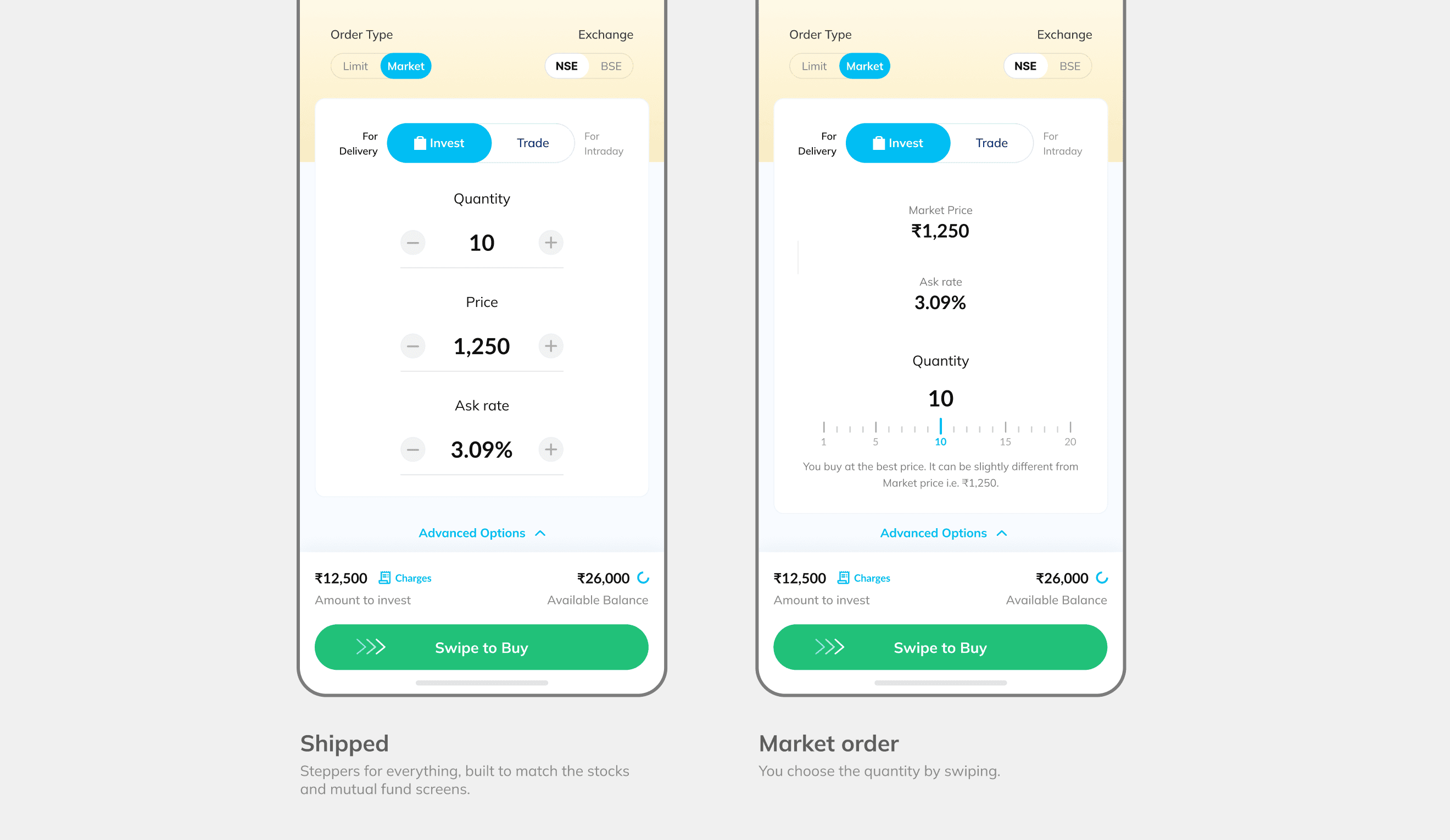
I designed a quantity slider for picking 1 to 20 bonds. It was replaced with the standard stepper, for consistency with the rest of the app.
Compliance.
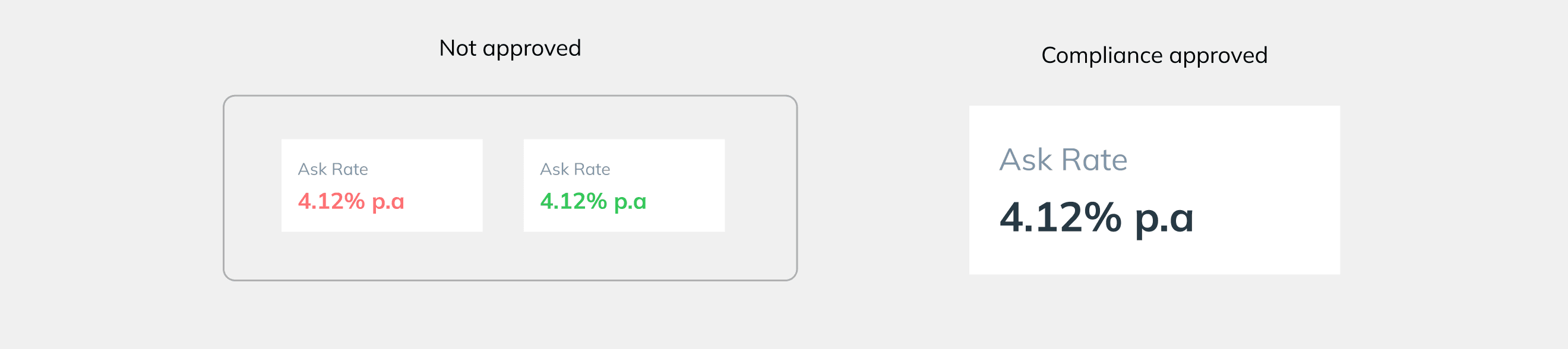
Two rules from legal and compliance: every marketing related banner carries a disclaimer, and no red or green text to promote or discourage a bond.
Collaboration
Every other day with the PM, every week with the engineers.
The PM and the bonds expert sat with me every other day, and that’s where the questionnaire, the matrix and the tab names came from. Every week I met the engineers to learn what the app could already do and what a new control would cost. Three times, a decision needed customers, so I went back to the people I’d interviewed. I handed off in Figma, and the product team built it.
Outcome
Bonds launched on May 22, 2023, on iOS first, then Android. In its first months, more than 85,000 people applied to use it and 65,000 were on the platform, across tenures from a few days to 39 years. The average first investment was ₹14,500, from people who had never bought a bond.
- 85K+
- 65K+
- ₹14.5K
- Campaign↗
Reflection
If I owned this today… I would track three numbers: listing-to-detail taps, detail-to-order rate, and watchlist saves per user. Together they would tell me whether the card does its job, whether the detail page earns the purchase, and whether comparing inside the app replaced the screenshots.