

Camera-off culture is a load-bearing default
“I’m always kind of paranoid people are going to hear me talking, or like it’s going to be recorded.”

Eleanor
Attendee
Toniq AI combines spatial navigation with AI-powered connection, so online events feel alive
Role
Product Strategy, Product Design & Visual Identity
Timeline
8 Months(August 2025 - April 2026)
Mentor
Blake Hudelson(Co-Founder, BoomPop)
The problem
There’s a difference between being at an event and being in one.
Online events solved attendance. What they never solved: the moment two strangers find each other, recognize a reason to talk, and walk away with something worth keeping.
Toniq is an argument that the problem isn’t the video call. It’s the absence of a design.
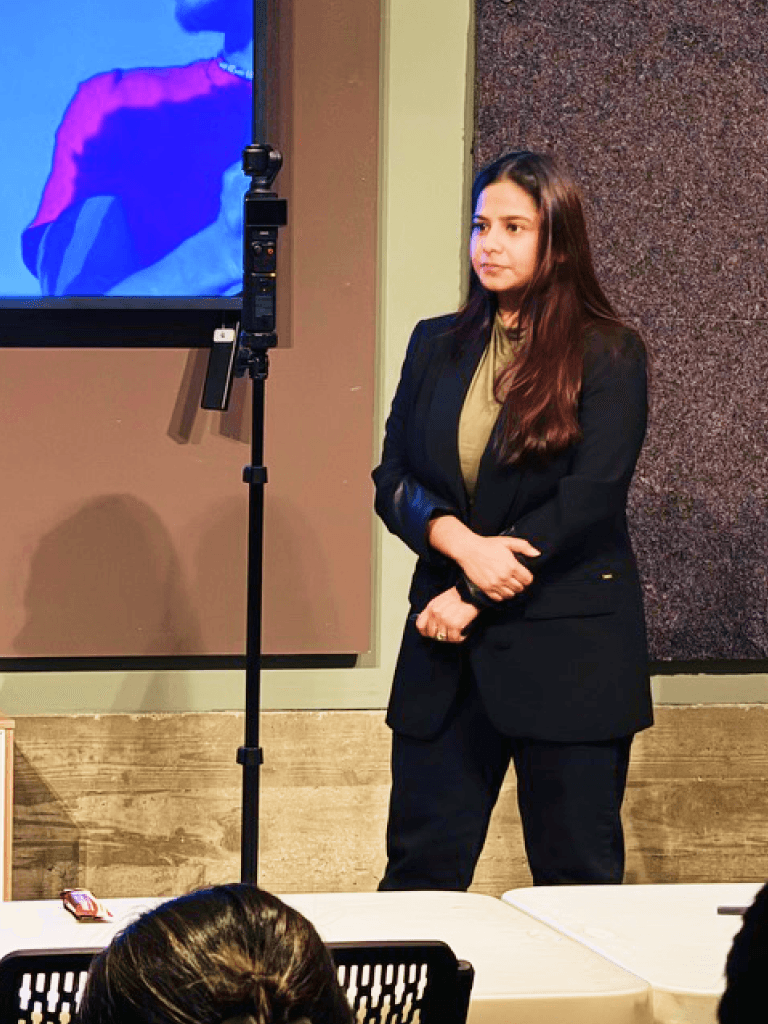
Jury Presentation
Rebuild the room (spatial proximity, ambient awareness, the option to drift) and let AI handle what the room can’t (context, recall, follow-through).
The connection problem stops being a UX problem and becomes a system problem worth solving.

10 in-depth interviews across 6 sessions.
Community organizers, event hosts, program emcees, repeat attendees, and graduate students raised on remote-first programs.
Camera-off culture is a load-bearing default
“I’m always kind of paranoid people are going to hear me talking, or like it’s going to be recorded.”
Eleanor
Attendee
Breakout rooms fail at the seam
“Breakout rooms can do, but I don’t know how to use them. Physically you are aware when a person is done talking. Online? I’m not sure.”

Bhavneet
Attendee
Retaining connection
“If I just make one, just one friend from an event, I think for me the event is successful. But that doesn’t happen.”

Eleanor
Attendee
The “one bridge person” barrier
“No one has made friends virtually through these sessions.”

Thomas
Facilitator
Facilitator burnout is invisible labor
“He would love an app that shows the relevant info of each person as they talk, from the worksheet they filled out.”

Dr. Abbassi
Host & Researcher
Connection evaporates within 72 hours
“Being able to listen to specific people or have side conversations would be interesting.”

Christian
Content Creator & Host
Two users experienced the same event through different interfaces. Every existing platform designed for one and assumed the other would benefit. They mapped differently.
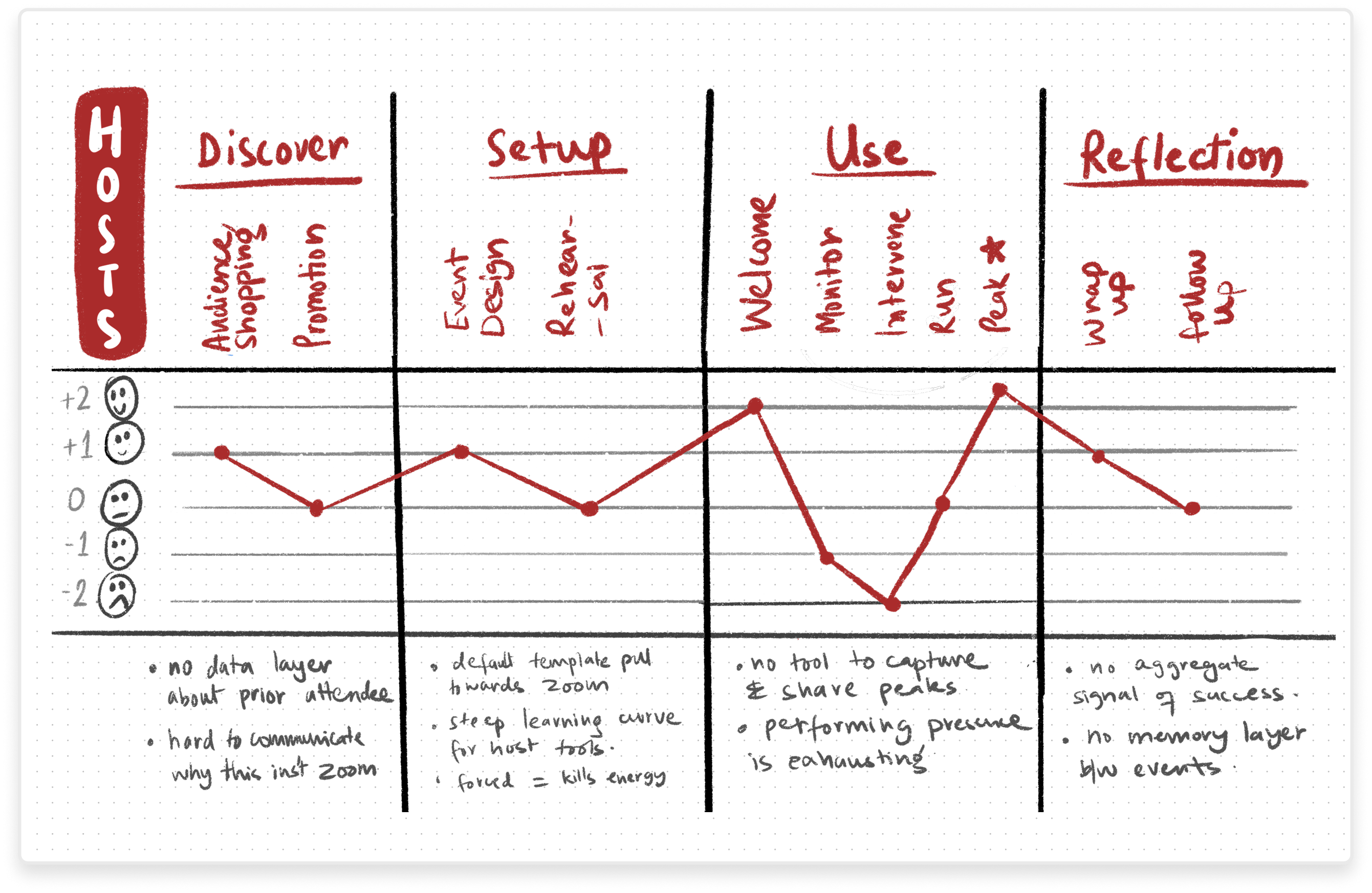
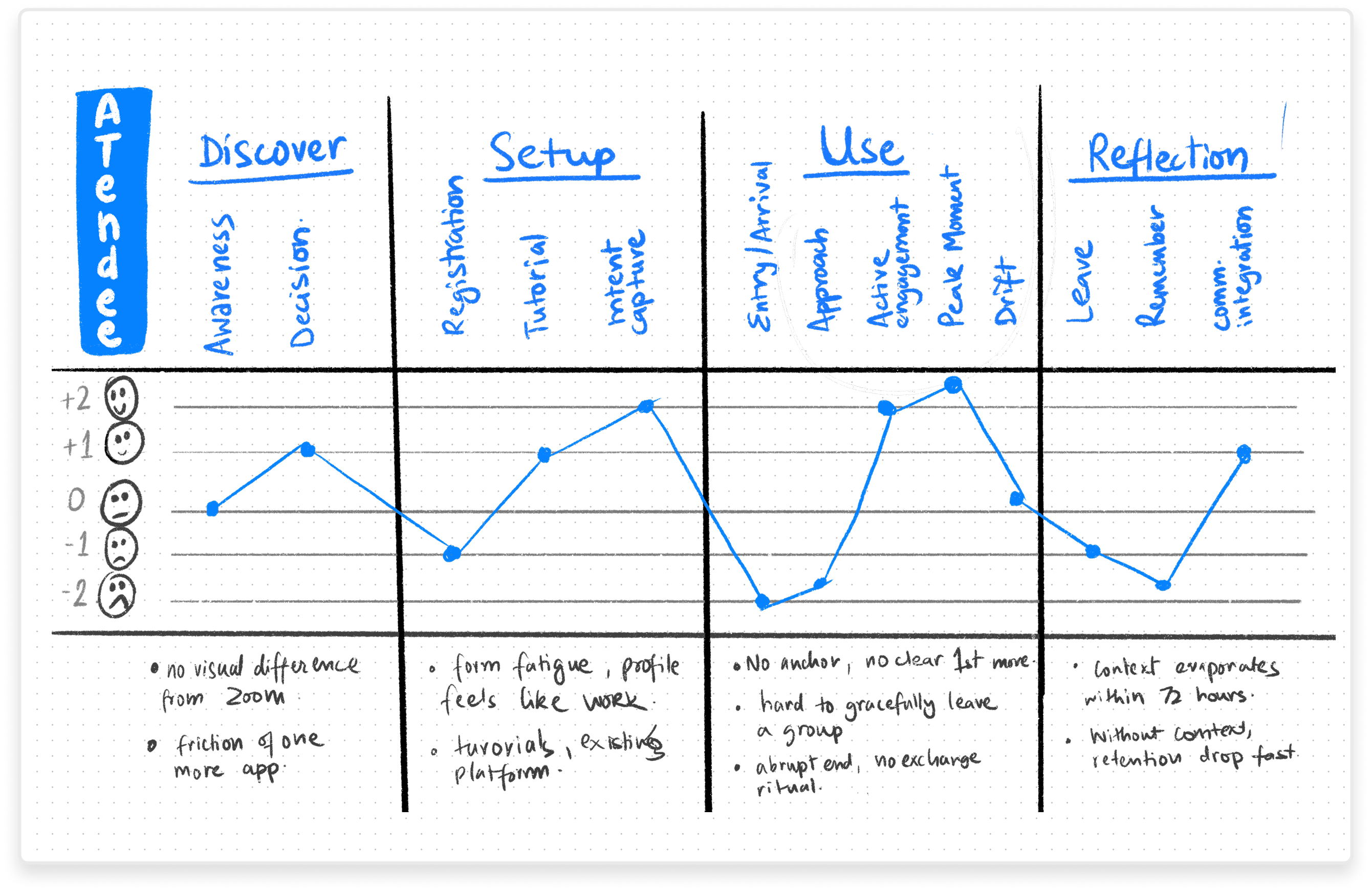
Attendee
Hosts
No context of people
Can't flow in and out of conversations
Connections disappear after the call
Can't see who's disengaged
Forced participation kills energy
Hard to find engaging activities
Attendee
Hosts
What the map revealed: every breakdown was an information problem. The system knew who was there, who was talking, what was on profiles. It just wasn’t surfacing any of it to the people who needed it.
The thoughtful question: why is AI the right intervention, and not better profiles, host-curated intros, or a smarter matching algorithm?
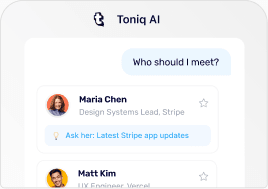
Context changes per person, per moment.
A static profile can’t know why you’re attending tonight. Variable, in-context reasoning is AI’s strongest move.
Cold-start is the whole problem.
Most AI matching systems work after. At a 90-minute event, there is no “after.” AI lets us substitute language understanding for behavioral data.
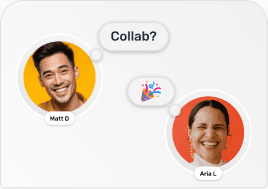
Memory needs synthesis, not storage.
A transcript isn’t memory. A summary that knows why you cared is.
What AI is not doing: replacing THE moment.
The conversations are still yours.
The AI’s job ends when two people start talking.
Solution
Toniq’s substrate isn’t the AI. It’s the room.
The canvas gives you three things a video grid can’t:
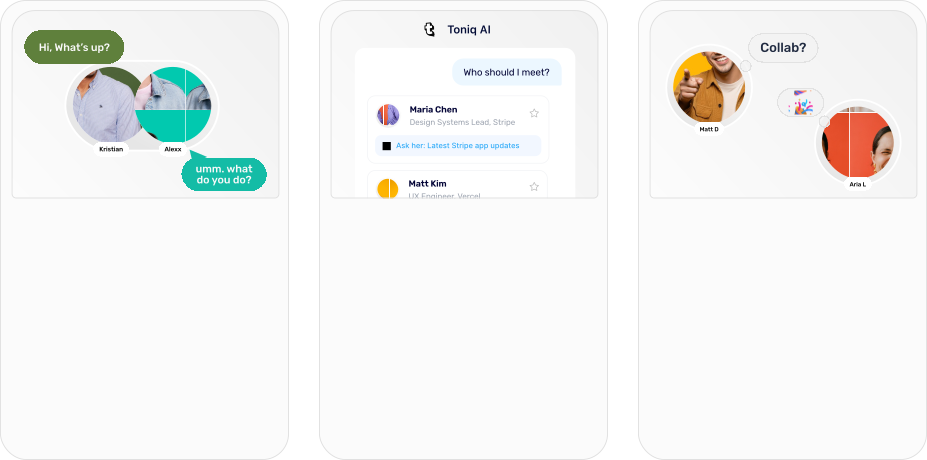
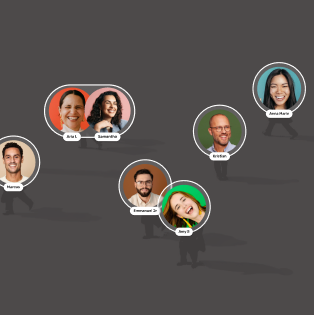
Proximity as signal. Standing near someone is a low-cost way of saying I’m interested to talk. Walking away is a low-cost way of saying I’m not interested. Both moves are socially legible without anyone speaking.
Zones as topic gravity. Instead of rooms you commit to, zones pull conversation around themes. You drift between them.
Avatar bubbles as ambient awareness. You can see who’s talking, who’s idle, who’s clustered, without breaking anyone’s flow.
The AI rides on top of this.
It can’t be evaluated independently because the spatial substrate is what makes its suggestions actionable. “Go meet Maria” is meaningless on a Zoom grid. On Toniq, it has coordinates.
Most products treat AI as a feature you open.
Toniq treats it as a layer that’s always running, doing four different jobs across four moments of the event.
Before Event
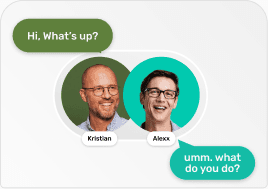
Intent capture: natural language, not a dropdown. The goal is to capture intent the way you’d describe it to a friend.
Output: three ranked introductions, each with a specific reason.
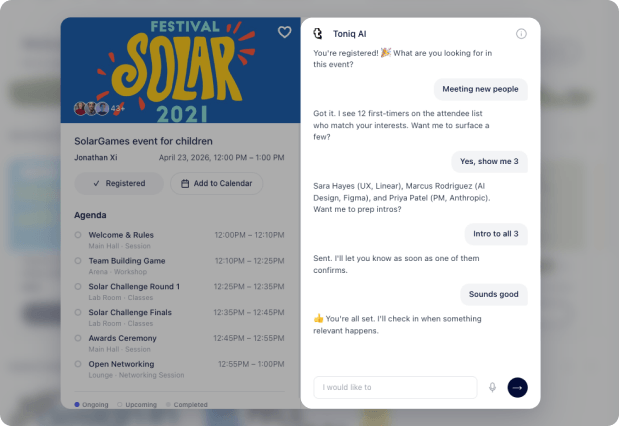
AI suggests. User decides. Always.
This sounded like a value statement until I had to build the screens where it lives. Three design decisions made the principle real:
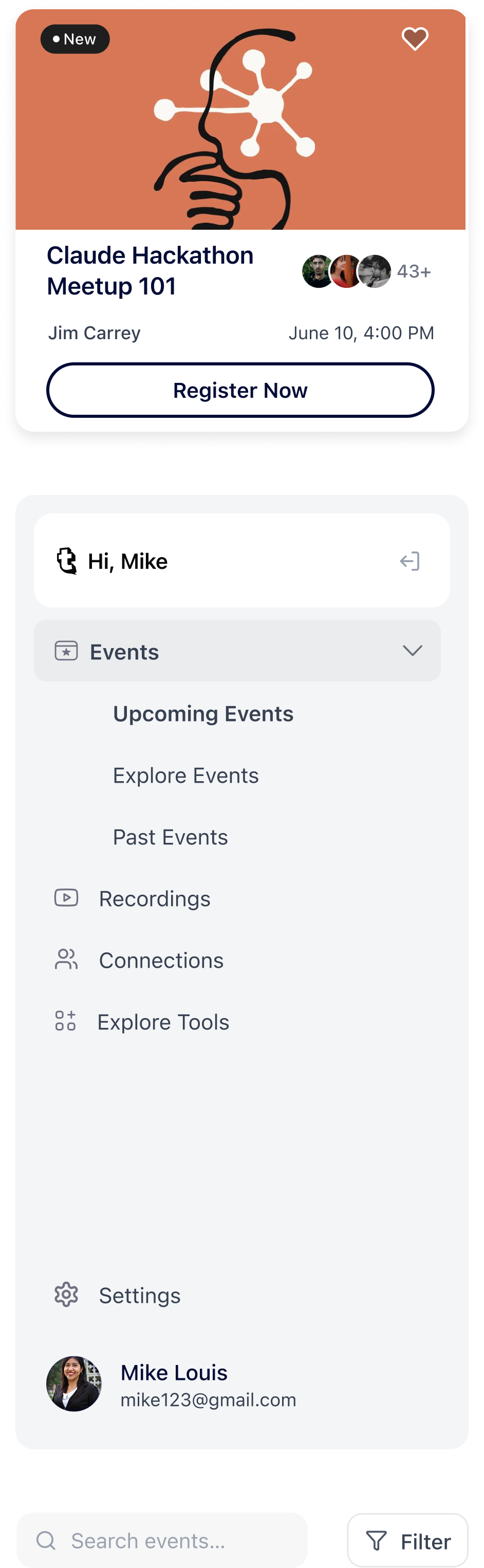
1. The override is louder than the suggestion. Every AI suggestion shows a Not interested control with equal visual weight to Accept. Most products bury the decline. We made it parallel.
2. The system shows its reasoning. “Maria, Design Systems Lead at ABC Corp — because you mentioned design systems in your intent.” The italicized clause is non-optional. Without the why, there’s no informed consent.
3. The AI never initiates a conversation. It will suggest you meet Maria. It will not message Maria for you. The handoff from AI to human happens at the threshold of contact and stays there.
A few rounds of formative testing across the 4 months.
But the numbers are directional, not statistical. Appropriate for a thesis, insufficient for a launch. The next study needs 30+ participants across at least two event types, and the host experience needs its own track.
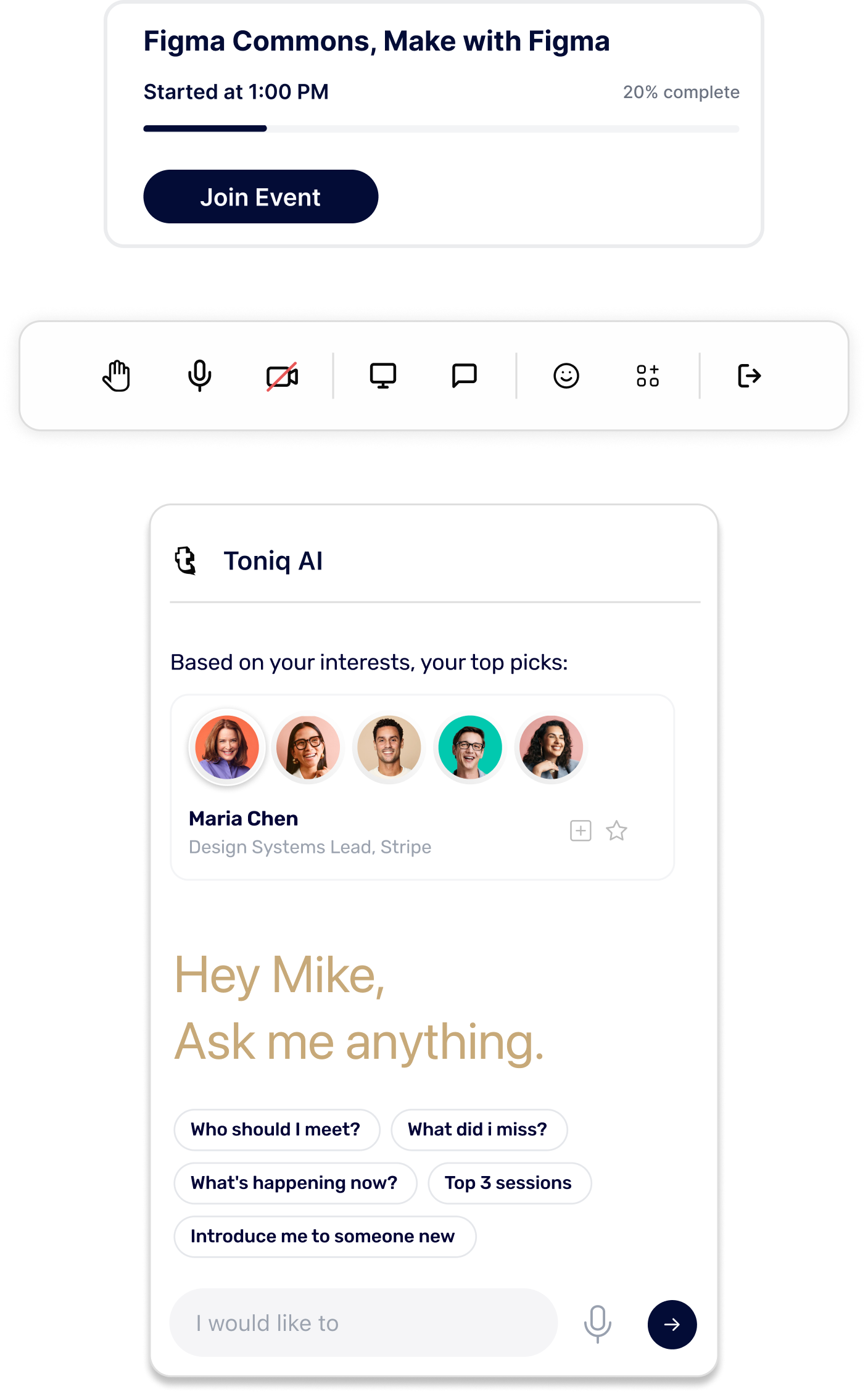
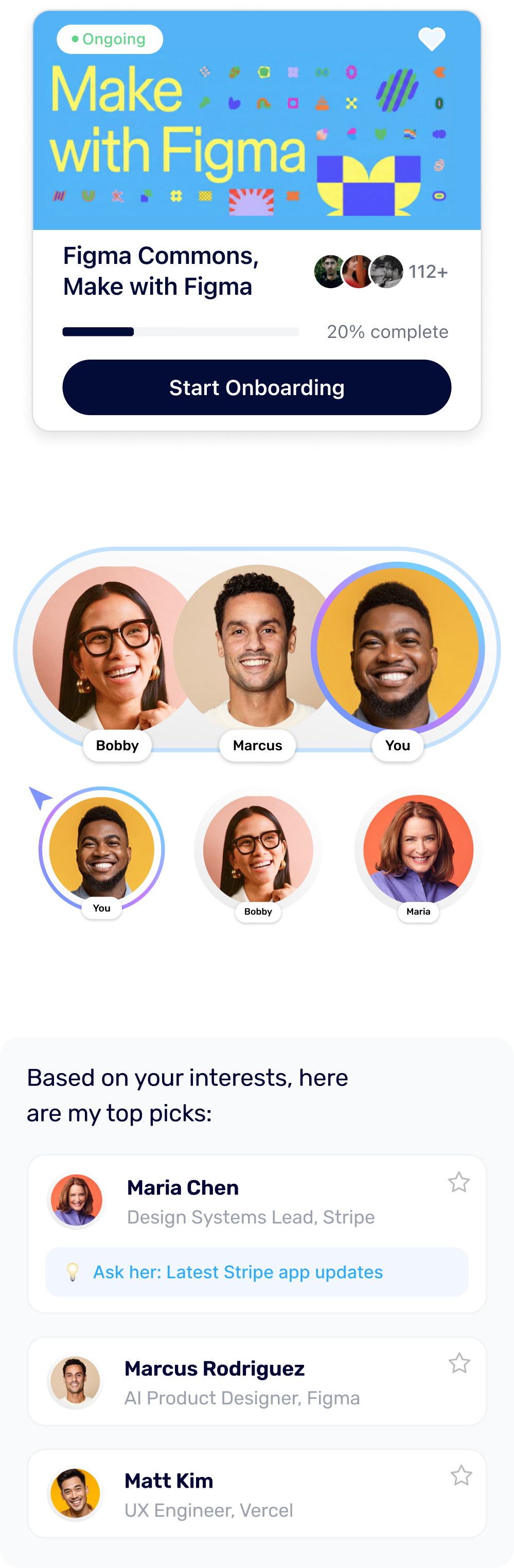
Toniq is made of a lot of small decisions that add up. From the dashboard to the spatial canvas, the event card with its progress indicator and host detail, the collapsible sidebar that keeps navigation accessible without taking over the screen.
The avatar bubbles show you who's talking without interrupting anyone. Small things, designed carefully.
Reflection
Onboarding through movement, not instruction.
Tutorial overlays got skipped by 4 of 5 testers. The entry zone should teach navigation through navigation — a guided drift that ends when you’re in the main canvas.
An AI transparency layer that scales.
At 8 users, a wrong suggestion is a shrug. At 800, it's a brand problem. The consent and explanation layer needs to be infrastructure, not garnish.
A post-event experience worthy of the event.
The recap is the lightest screen in the system. The moment after an event is when a connection becomes a relationship or disappears. The AI has every input it needs — context, conversation, intent — to make that moment do real work. We didn't ship that yet.
The host product, properly.
Most of our research was attendee-side. The bird's-eye host dashboard and mode-switching were designed from first principles, not from validated need. That's the first thing the next round fixes.
This is an iterative process. This is my personal project. I would love to know your thoughts and feedback. Please email your feedback at Copied! or message me on LinkedIn.