Designing financial access for millions
Role
Founding Designer (Visual & UX)
Team
For MVP 1:
2 Developers
1 Product manager
1 Bonds Expert
Timeline
17 Months
Jan '22 - May '23
Stack
Sketch, Figma,
Adobe Illustrator
Backstage
Paytm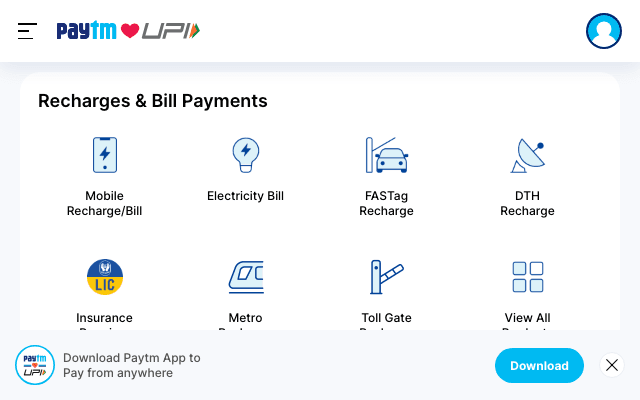 paytm.com is India's largest payments ecosystem, with 333M+ registered users and around 80M people transacting every month. Paytm Money
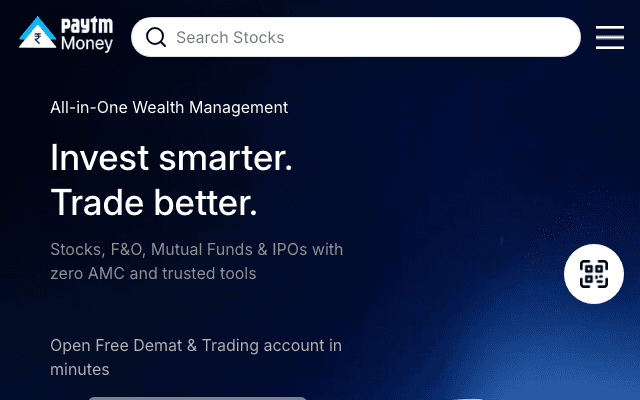 paytmmoney.com is its investing arm, around 4M users who mostly bought stocks and mutual funds.
In early 2022, Paytm Money decided to sell bonds. Earlier, they were built for institutions and needed ₹10 lakh to start. That year SEBI (Security and Exchange Board of India) wrote new rules for online bond platforms and the minimum dropped to ₹1 lakh.
Where I came in
Most of my work at Paytm Money was about optimizing existing behaviors. This project needed a new one.
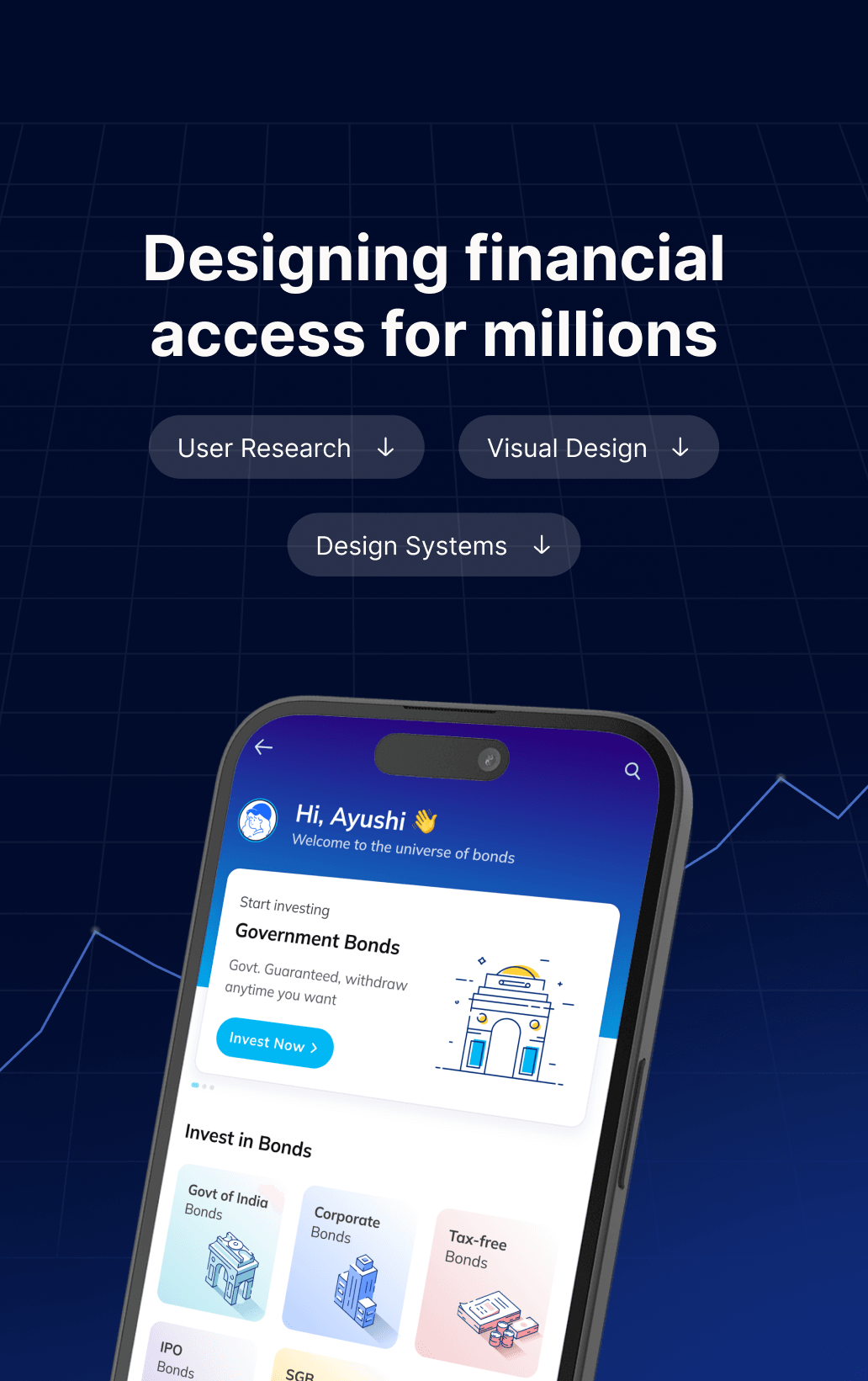
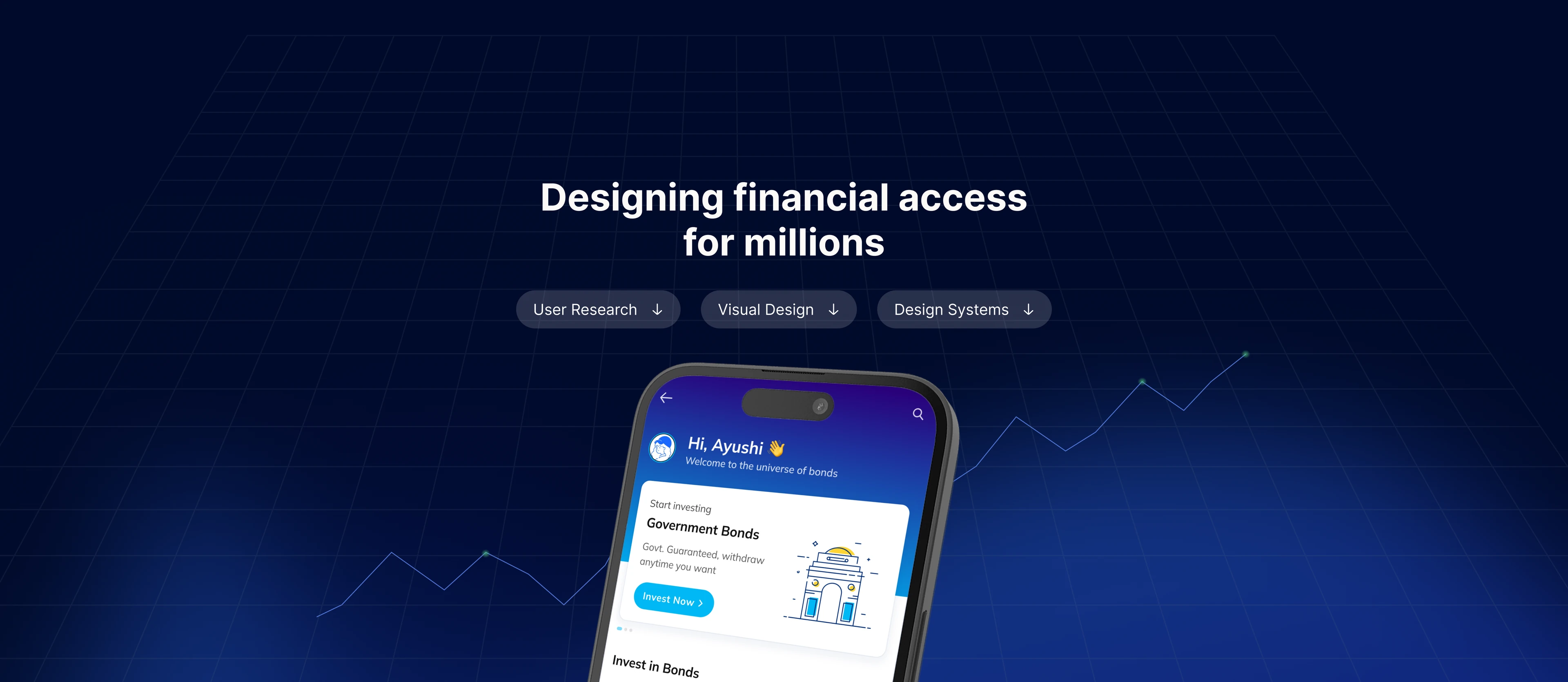
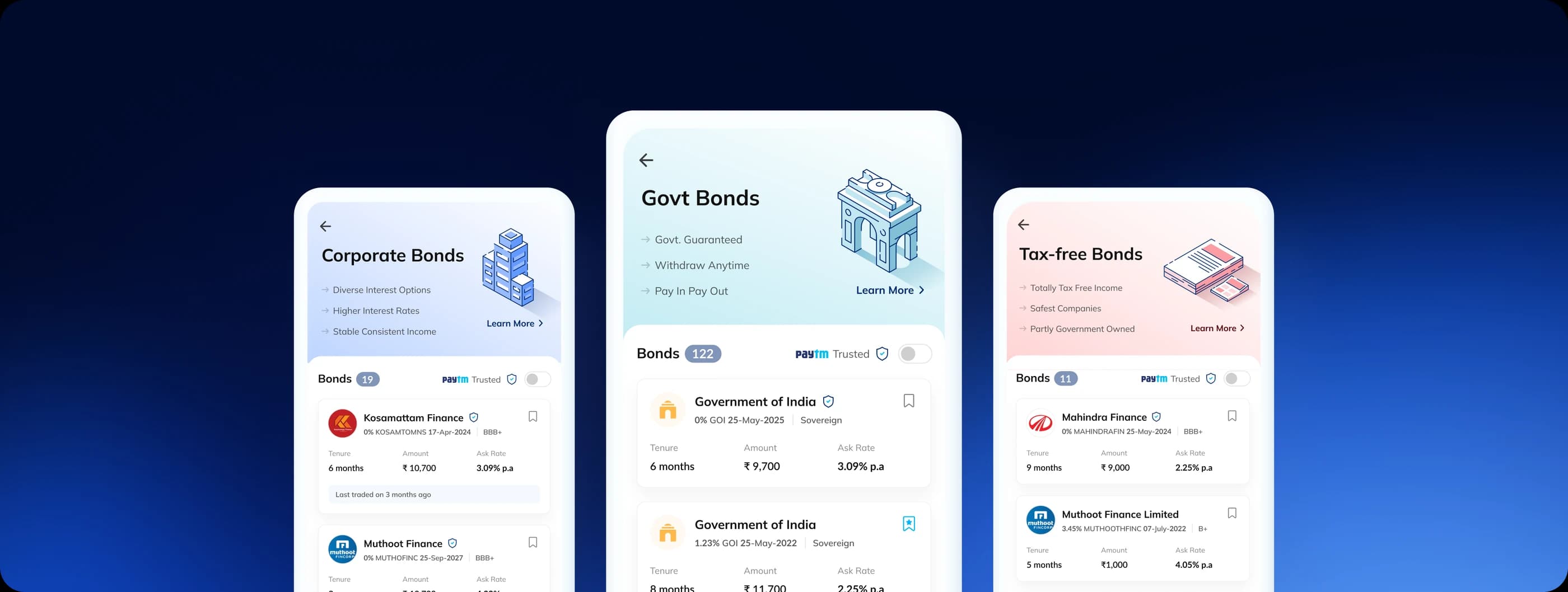
So, I came in as the founding designer on the Bonds team. I designed all screens for MVP 1 and led the UX strategy, owning the journey from discovery to investment and setting the visual language.
As a Visual Design Lead, I also led the launch campaigns, testing icons and creatives to find what worked for the brand, and turning that into the visual strategy.
My contributions
- 12 user interviews (new and experienced users).
- All MVP screens: onboarding, listing, details, comparison, portfolio.
- Design system, 40+ custom icons scaled across 40+ screens.
- New UX patterns and interaction.
- Launch campaigns and visual communication, testing icons and creatives to shape the brand strategy.
Impact
2.4x
5% to 12% increase in CTR. Homepage-to-Bonds page.
₹14.5K
Average purchase size, about $150 (6 months)
What was the problem identified?
Retail investors avoid bonds because bonds feel incomprehensible. For decades they were an institutional product: lakh-plus ticket sizes, jargon like yield, coupon rate, maturity, and nothing designed for a first-timer.
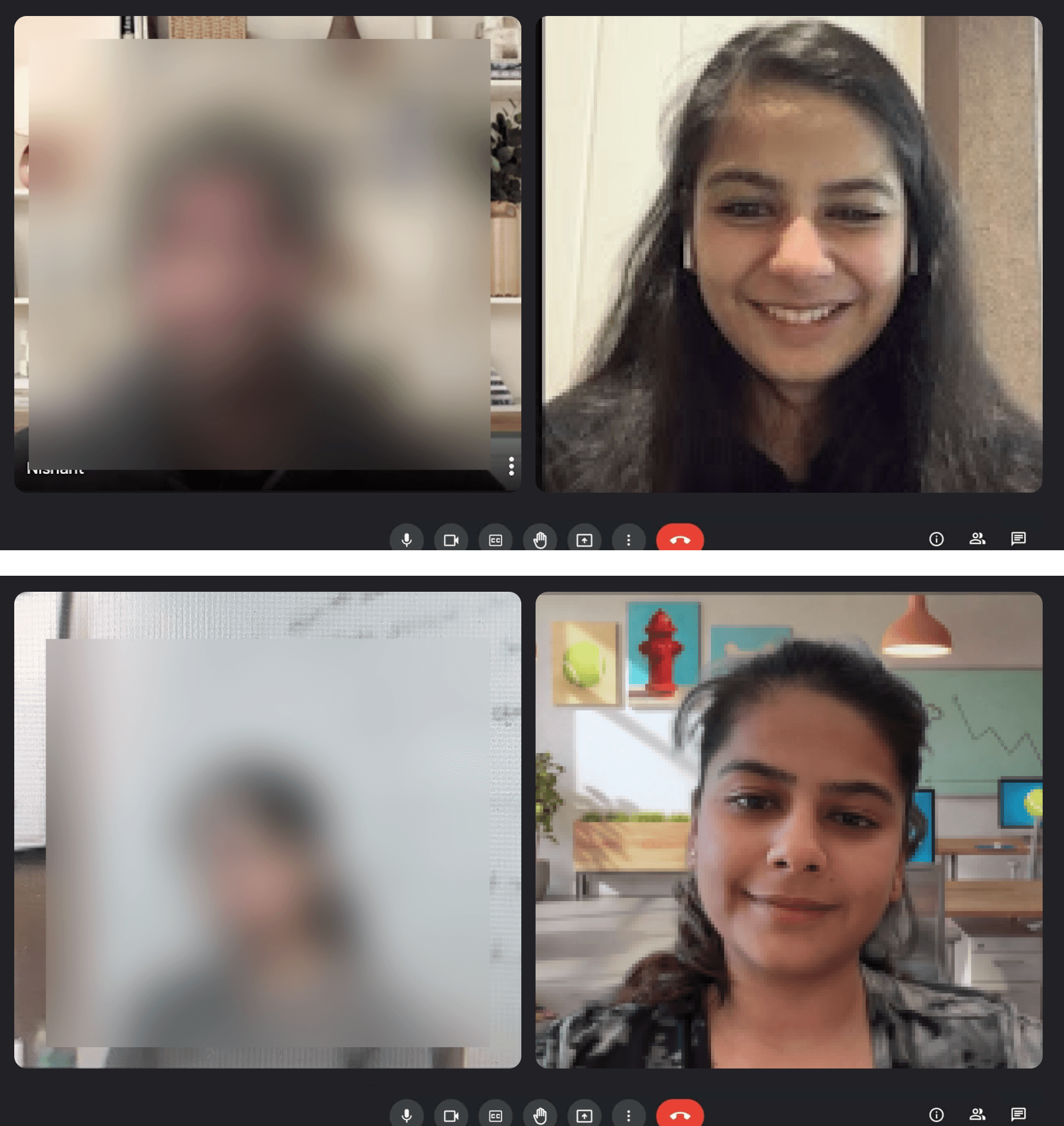
To design the entry point, I interviewed 12 Paytm Money users: some new investors, some mutual fund customers who already bought bonds through other channels.
They came from different starting points but said the same things. Every listing threw all information at them at once, and nobody could tell which numbers actually decide whether a bond is worth buying, or how to compare one against another.
What research gave me
So, while interviewing future-customers, I was asking what they check before trusting one: what they look for first, what makes a listing feel safe, what makes them walk away.
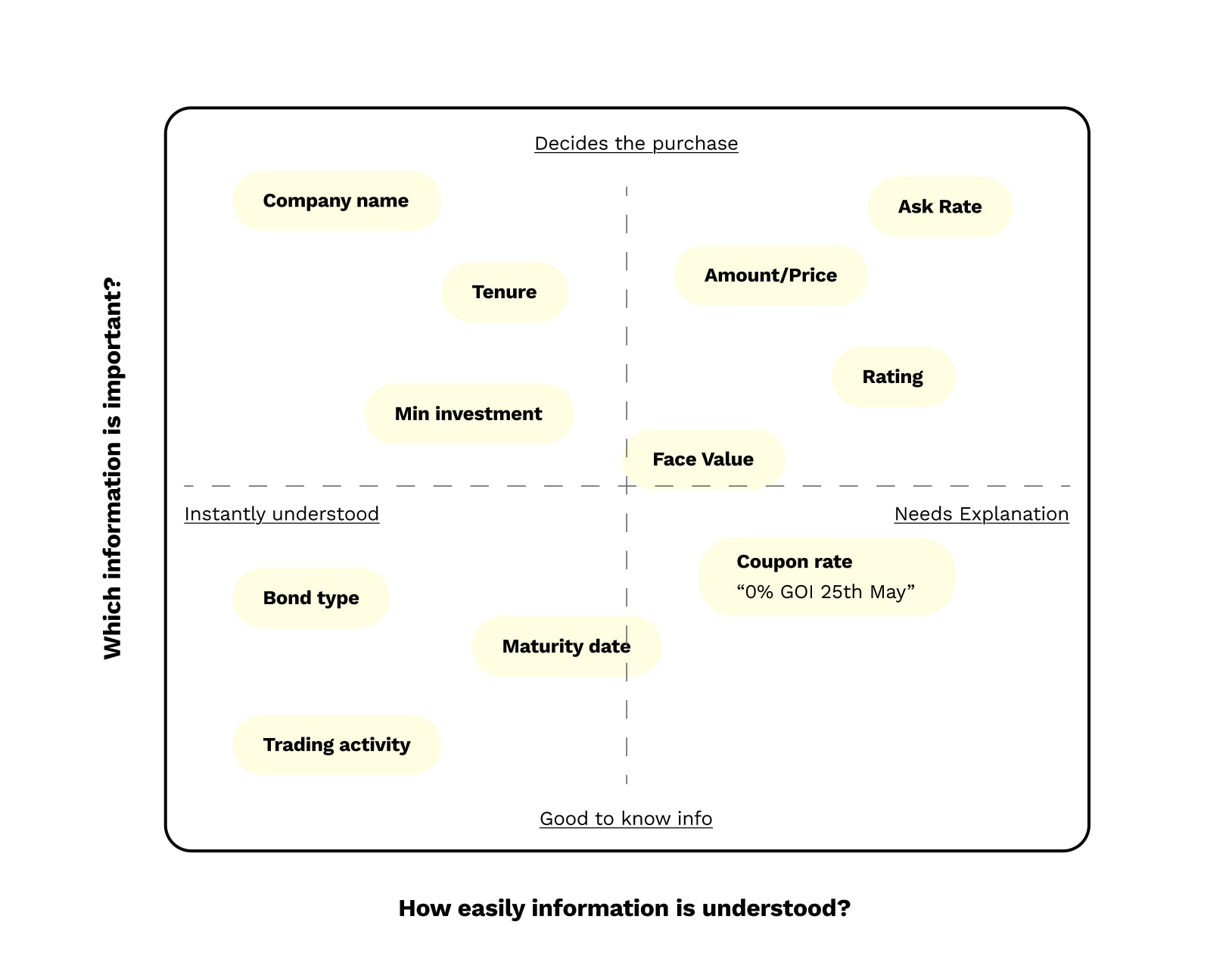
Every answer became the backbone of our research, and we plotted them on a matrix (below).
Company name first, because trust starts with "have I heard of them." Then three numbers in order: how long is my money locked (tenure), how much do I need (amount), what do I earn (ask rate). Everything else, rating, coupon, maturity, mattered but didn't block the decision.
Key features
Feature 1/4
Smart listing interface
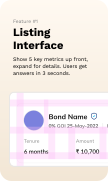
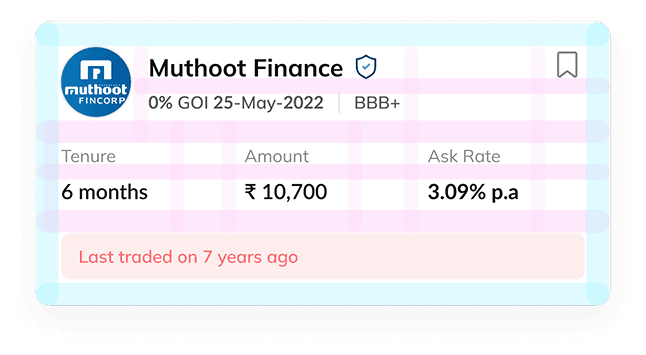
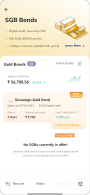
From the research and regular conversations with investors, we reduced nine-plus data points into a decision-first card that's quick to scan and compare.
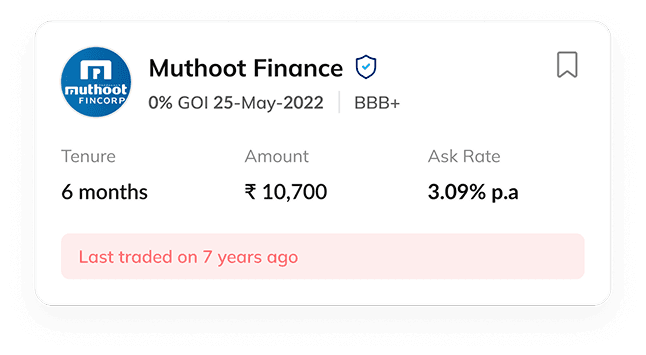
Explorations the PM and I worked through before landing the final card
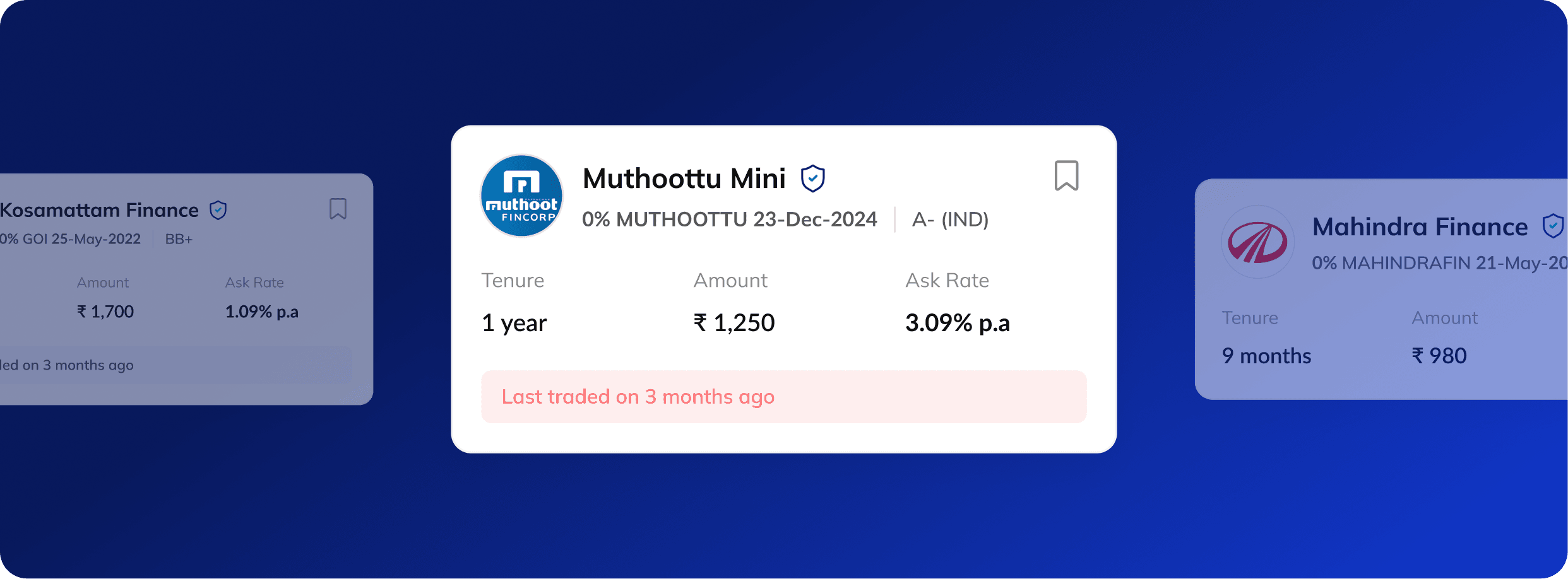
The cards were designed with a clear visual hierarchy.
Company name first, because trust starts with “have I heard of them.” Then the 3 numbers customers actually ask for, in the order they ask them:
tenure (how long is my money locked),
amount (how much do I need),
ask rate (what do I actually earn).
The hardest call was what to demote.
Rating and maturity mattered, but research showed they confirmed a decision rather than drove it, so they moved to the secondary row. A save icon lets customers bookmark bonds for comparison.
Ask rate was the most consequential. Coupon is the rate printed on the bond; ask rate is what you earn at today's price. Across our inventory those two numbers diverged constantly (0% GOI shows 0% but earns 4.5%). Coupon would have made entire categories of our listings unreadable, so ask rate was the only field that stayed truthful across every instrument type.
The bottom strip answers two questions at once: is this real, and who else trusts this bond.
Feature 2/4
Watchlist & comparison
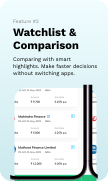
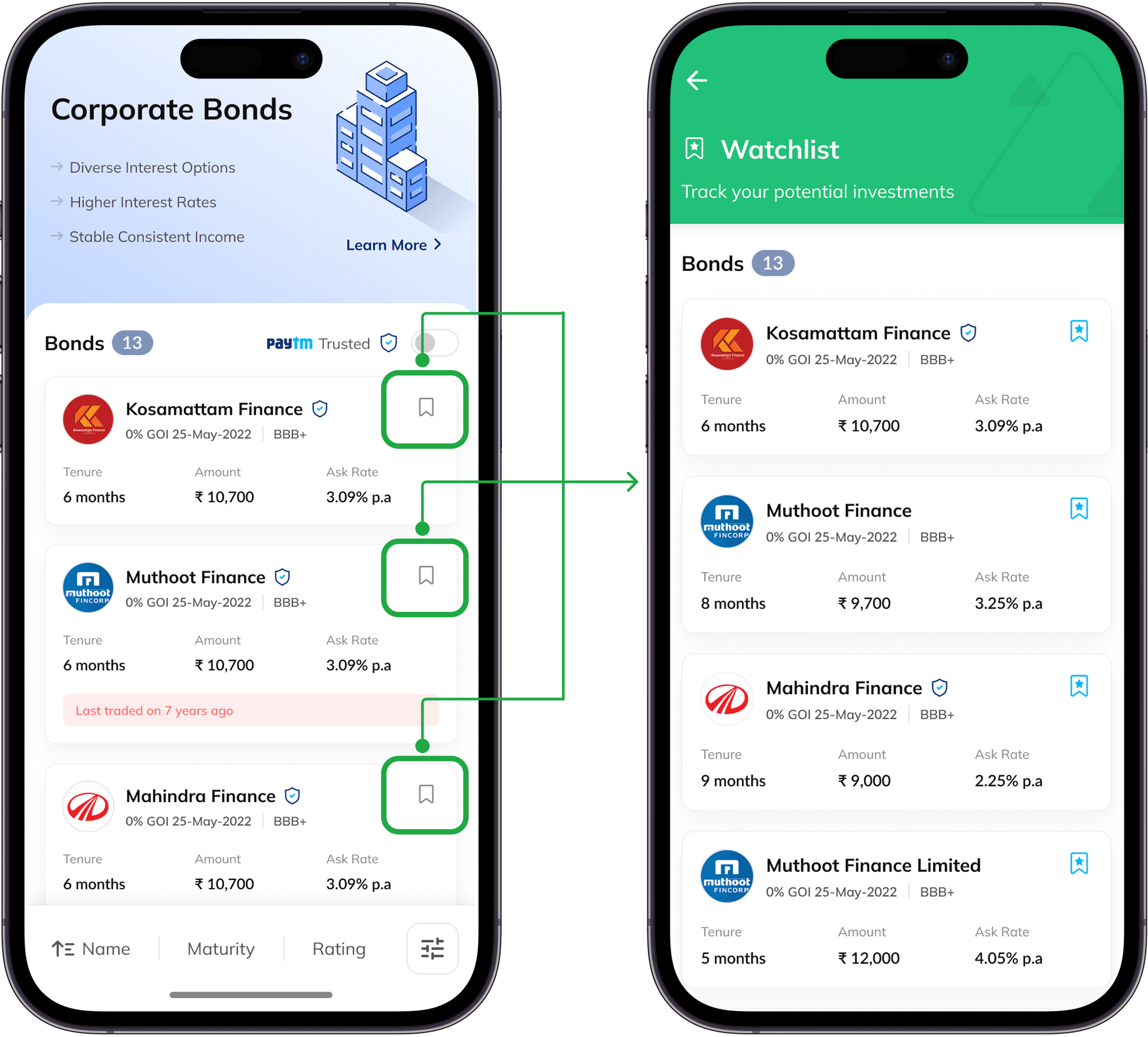
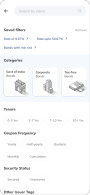
People used to screenshot bonds to compare them later. Our research also found that they relied on existing expert blogs and other platforms to compare bonds, so we let them save bonds to a watchlist. Later, we added filters for tenure, rate and rating.
Feature 3/4
Centralized portfolio hub
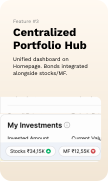
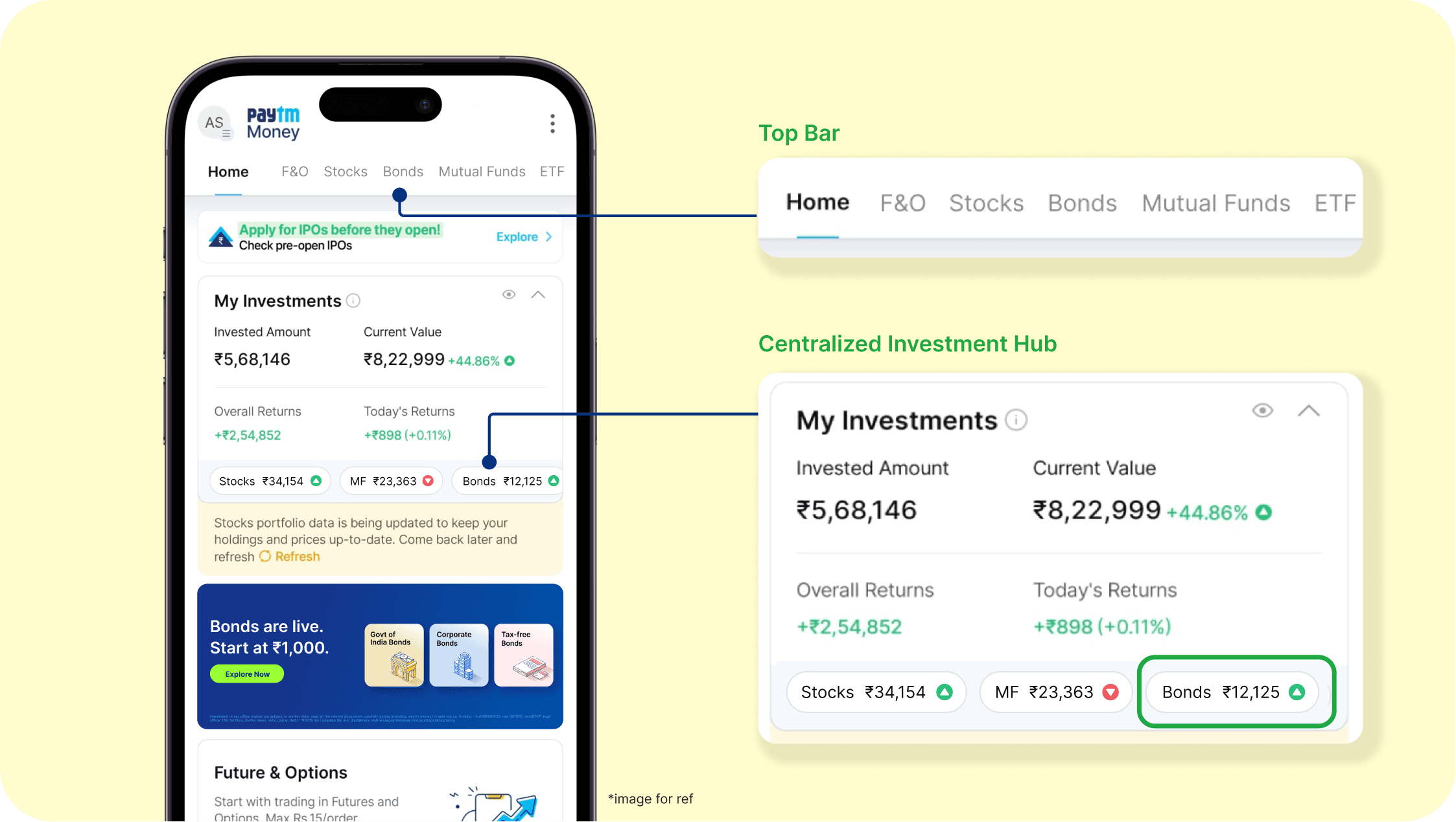
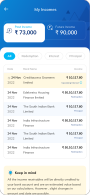
Stocks, MF, gold, bonds scattered across app. No unified view of total portfolio. Solution: Single dashboard showing all investments: total value, breakdown by asset class, quick stats for each.
Feature 4/4
Comprehensive
details & education
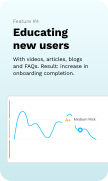
Detail pages overwhelmed users with jargon and no context. Users had questions about unfamiliar terms so we designed a tabbed interface that segments information by user need, that could be details tab for bond specs, Company Info, financials, tax Informations, blog articles and beginner guides.
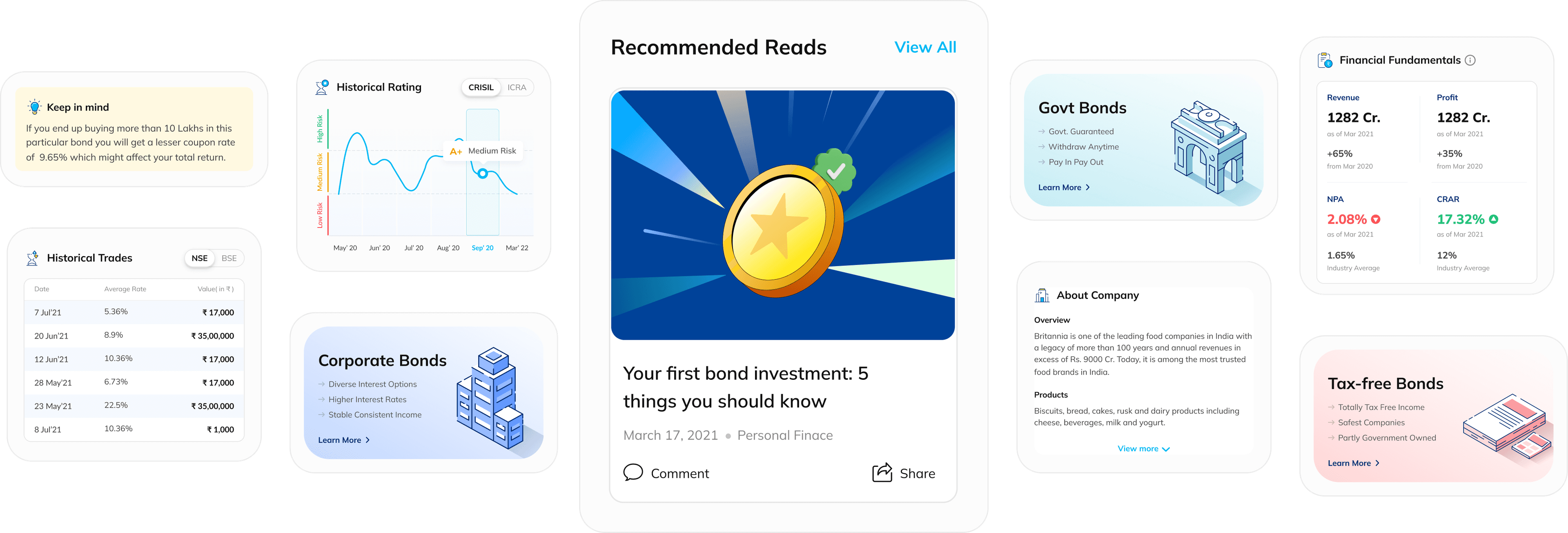
Most of this came down to education. First-time buyers needed somewhere to start, so the content team wrote blogs, the marketing team made short videos, and experts ran live sessions on Instagram and YouTube. We kept explaining how bonds actually work, because people only invest once they understand what they are buying. My job was to promote that content on the app.
Design system enabling faster production
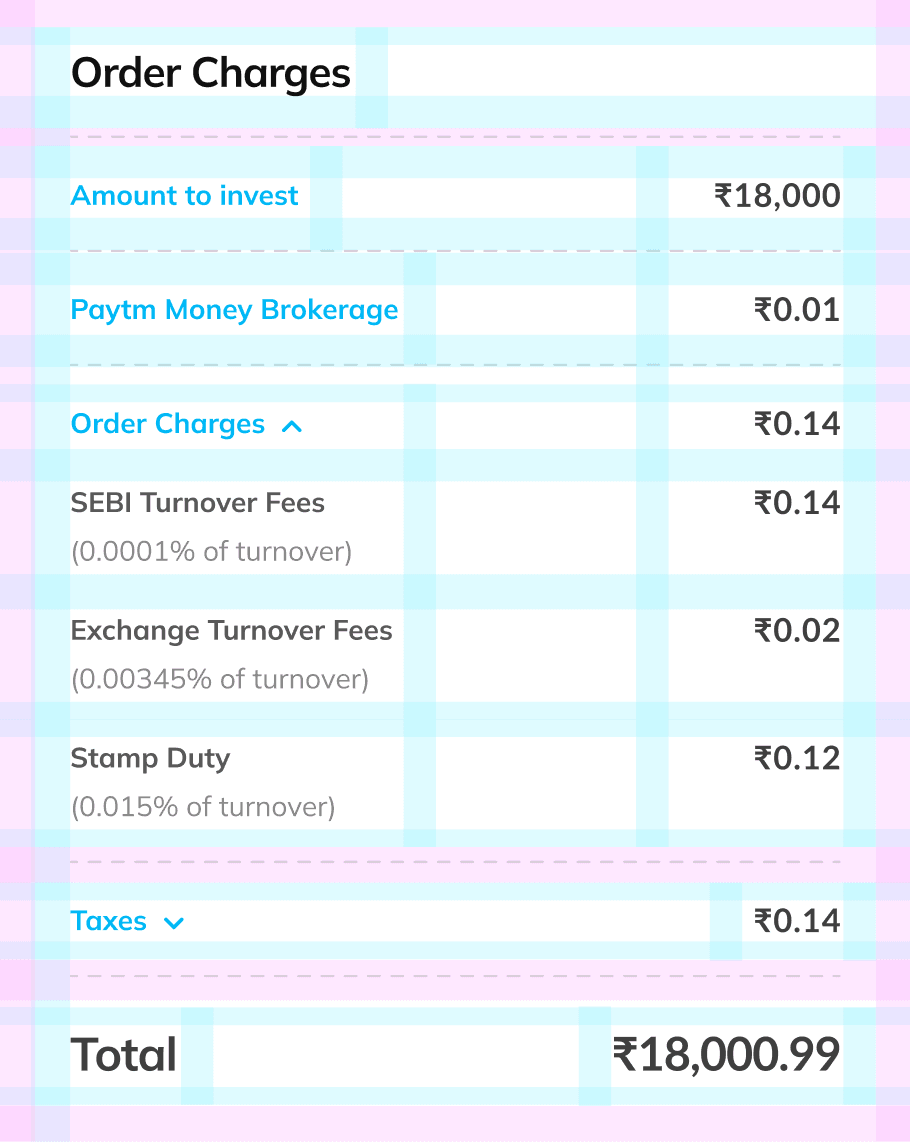
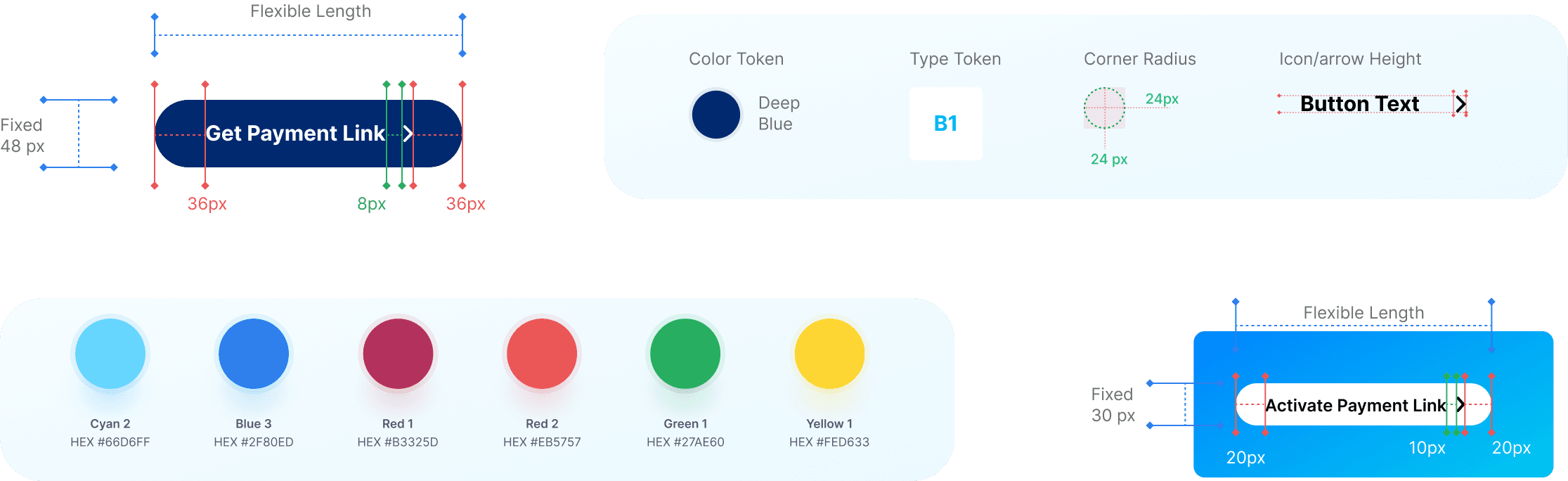
I set out to build a design system that could carry around 40 screens and take the guesswork out of everyday decisions.
Colors: 6 semantic colors, drawn from Paytm design system
Typography: Mulish for text, Lato for numbers, both moving to Inter in MVP2
I also worked alongside the design system product team, who were building a unified set of reusable foundation components to bring clarity, consistency and structure across every interface.
Icon system for financial clarity
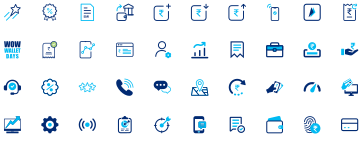
Created 40+ custom icons specific to bonds domain.
These icons do more than look good. They:
✓ Reduce cognitive load
✓ Create visual consistency
✓ Improve scannability (icons found faster than text)
Icon library follows design system:
2px stroke, consistent radius, color coordination with semantic meanings.



What this project taught me?
This project was about trust. This project taught me that the best design problems aren't about making things prettier or faster. They're about removing barriers to human understanding.
That framework designing to remove psychological barriers, not just technical ones. This is what I want to keep building on.
Trust beats trends every time. That's the lesson.
Let's see how we launched it
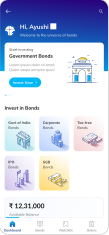
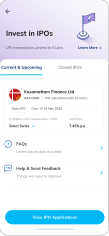
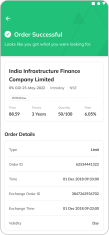
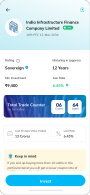
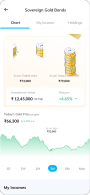
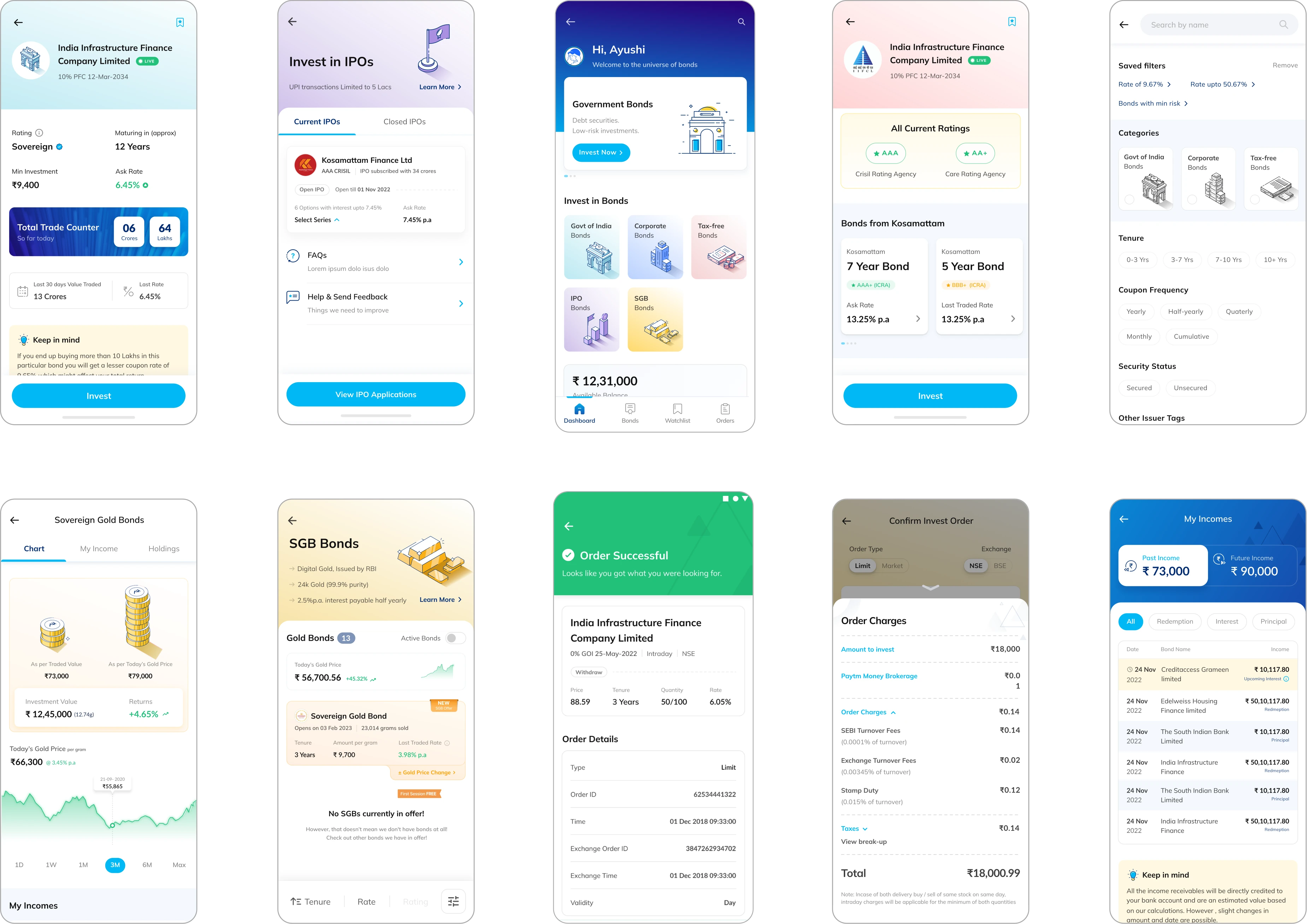
This was the bonds product.
The campaigns case study explains how we structure the funnel analysis.