

Conversational AI that connects your symptoms to your ancestry
Role
Conversational design,
product and visual design
Team
3 Designers
and 1 Engineer
Timeline
1 Month
Tools
Claude
Figma
Figma MCP
ElevenLabs
Gemini
What if ancestry could explain symptoms?
ancestra AI was born at California College of the Arts, where we were challenged to explore the potential of conversational AI agents.
Our team became fascinated by a specific question: What if an AI could help people understand how their ancestors' experiences might be showing up in their health today?
This led us to epigenetics. The study of how environmental factors and life experiences can modify gene expression across generations.
My contribution: Led visual & brand strategy. Designed all onboarding screens. Conducted 8 user research sessions.
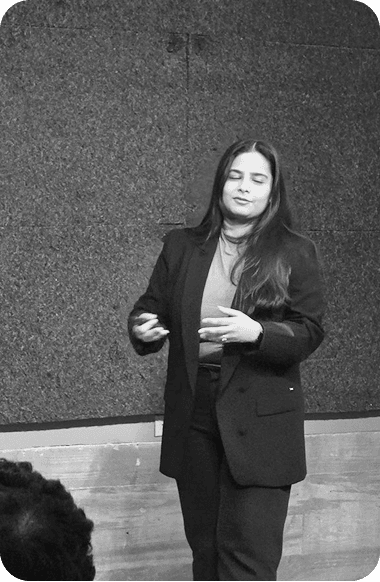
Final Presentation on ancestra
The problem
Services like 23andMe give you genetic data. Your Apple Watch tracks your sleep. Your doctor has your family history. But none of these systems talk to each other; leaving you with fragmented health insights that never connect the dots.
The result? People discover health conditions reactively, often years after they could have intervened.
Our core insight: Epigenetic markers unlike fixed DNA can change over time and even be reversed.


of chronic diseases have genetic components
3.0
3.5
4.0
4.5
yrsfor a thyroid condition to be diagnosed



33%
people unaware of family health patterns
*Source links below
Design philosophy
We wanted ancestra to feel like talking to a caring mother, someone who listens deeply, notices what you might miss, and tells you the truth with warmth.
Not a cold diagnostic tool or an alarmist app. A companion who says: "I noticed something. Let's talk about it."
This led to our core framework. Every conversation follows this arc. The AI doesn't jump to conclusions. It asks follow-up questions. It connects your symptoms to your family history. And when it finds something, it explains why with research, not fear.

Listens
Gathers symptoms, concerns and context

Integrates
Combines genetic data, family history, and lifestyle patterns

Identify
Recognizes patterns that connect ancestry to present health

Explains
Shares findings with research- backed context; not alarm

Act
Guides toward doctors and tests; never replacing medical care
Designing for real scenarios
We developed 4 detailed personas to test how ancestra AI handles different user contexts from inherited conditions to family planning concerns. One of our personas:


Japanese heritage; both parents' families from Hiroshima. Parents later immigrated to the U.S.

Struggles with thyroid symptoms, fatigue and mid day crashes. Frustrated by weight gain and not feeling heard by doctors.

- DNA test report
- Thyroid reports
- Apple watch data
The conversation experience
ancestra's conversational approach was intentional. We needed a format that could build trust, handle sensitive topics with care, and guide users toward action without alarming them.

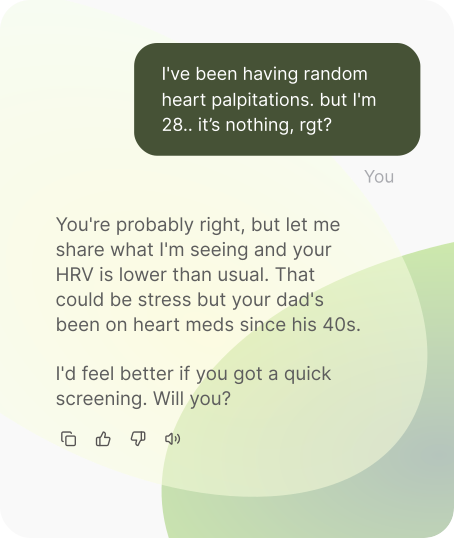
The agent asks probing questions before revealing insights, building a complete picture rather than jumping to conclusions.
It explicitly states it cannot diagnose, but provides enough context for users to advocate for themselves with doctors.
The tone is warm but direct. "I want to be honest with you" signals care, not alarm. The agent recommends specific, actionable next steps with urgency calibrated to the situation.
Why every word mattered
We agonized over how ancestra phrases bad news.
We rewrote it dozens of times until it felt right. "I noticed a pattern that's worth exploring with a doctor." It's not a diagnosis. It's an invitation to learn more.
We did the same for every sensitive moment:
- How do you ask about family deaths?
- How do you discuss genetic risks without causing panic?
- How do you encourage action without being pushy?
The answer was always the same: write like a person who cares.
It's not just your health


ancestra connects your genetic data, family history,
and daily patterns to uncover health insights that are
uniquely yours.
System architecture
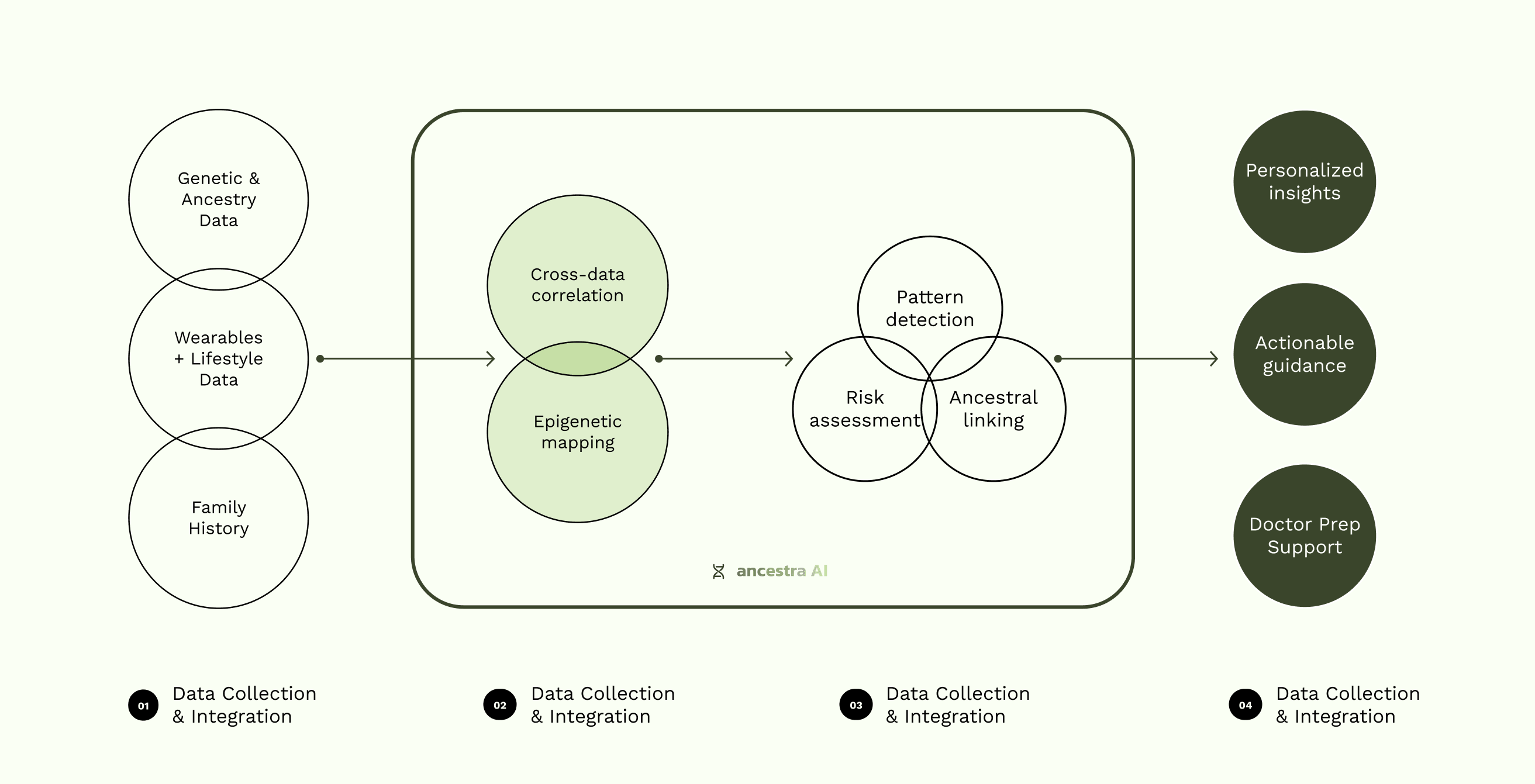
The system integrates genetic data, family medical history, wearable biometrics, and lifestyle information cross-referenced against research databases and cultural health contexts.
Building trust through onboarding
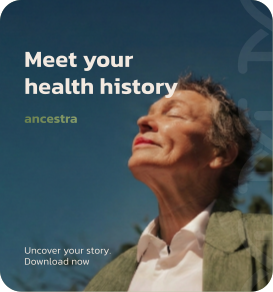
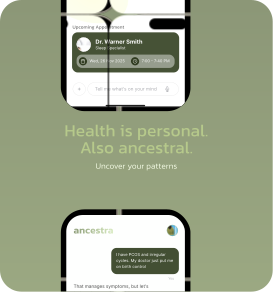
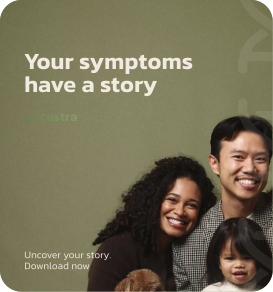
We designed onboarding to establish trust before asking for sensitive data. Every question explains why we're asking. Skip buttons appear on every screen, users can always return later.
Why? Because trust isn't demanded. It's earned.
Explore the click through prototype below ↓

Looking back
This was a class project. But it changed how I think about design. I learned that conversation is an interface and it requires as much craft as any visual design. Every word carries weight. Every pause matters.
I learned that health is personal in ways that are hard to see. A symptom isn't just a symptom. It's connected to your grandmother's life, your childhood, your stress.
And I learned that AI can feel caring if you design it that way.
ancestra isn't a finished product. It's a provocation: What if health apps actually understood you?

multi-generational intelligence for modern health.
Sources
- “Nearly 40 percent of the diseases in the study (225 of 560) had a genetic component.” Harvard Gazette
- University of Aberdeen study with British Thyroid Foundation (2023) abdn.ac.uk
- National Center for Health Statistics 2024 survey, via NIH MedlinePlus medlineplus.gov